1 min to read
Behind the Word: Conclave
How locked-in cardinals, a partly removed roof, and three years of deadlock in Viterbo gave the English language a word that now decorates corporate boardrooms.
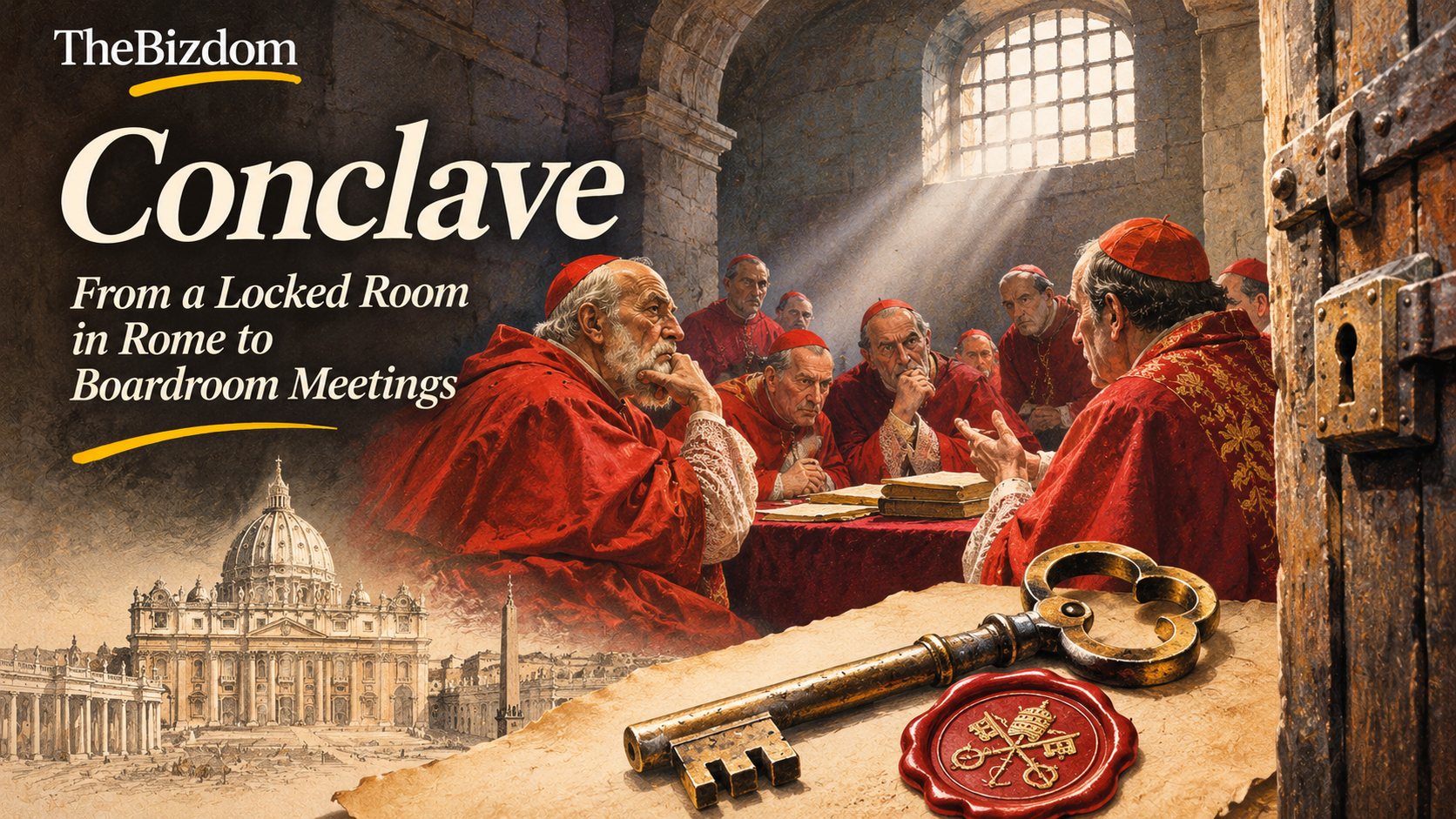
In November 1268, following the death of Pope Clement IV, the cardinals of the Roman Catholic Church assembled in the Italian town of Viterbo to elect his successor. Political differences amongst the cardinals prolonged the election for nearly three years.
The residents of Viterbo, tired of waiting, locked the cardinals inside the papal palace. Historical accounts suggest that even the roof of the building was partly removed and their food supplies restricted to hasten the decision.
Eventually, in September 1271, Gregory X was elected Pope. Three years later, he introduced rules requiring cardinals to remain in seclusion during future papal elections.
The word ‘conclave’ has its origins in the Latin conclave, meaning a room that could be locked, derived from cum (with) and clavis (key). The word entered the English language in the late 14th century, through French, and was used in connection with the election of a Pope. By the 1560s, its usage had extended to other private gatherings.
Over the years, the word found its way into the vocabulary of the corporate world. We now have banking conclaves, leadership conclaves and investment conclaves, many of which are attended by hundreds of delegates and extensively covered by the media!