2 min to read
The Mini story
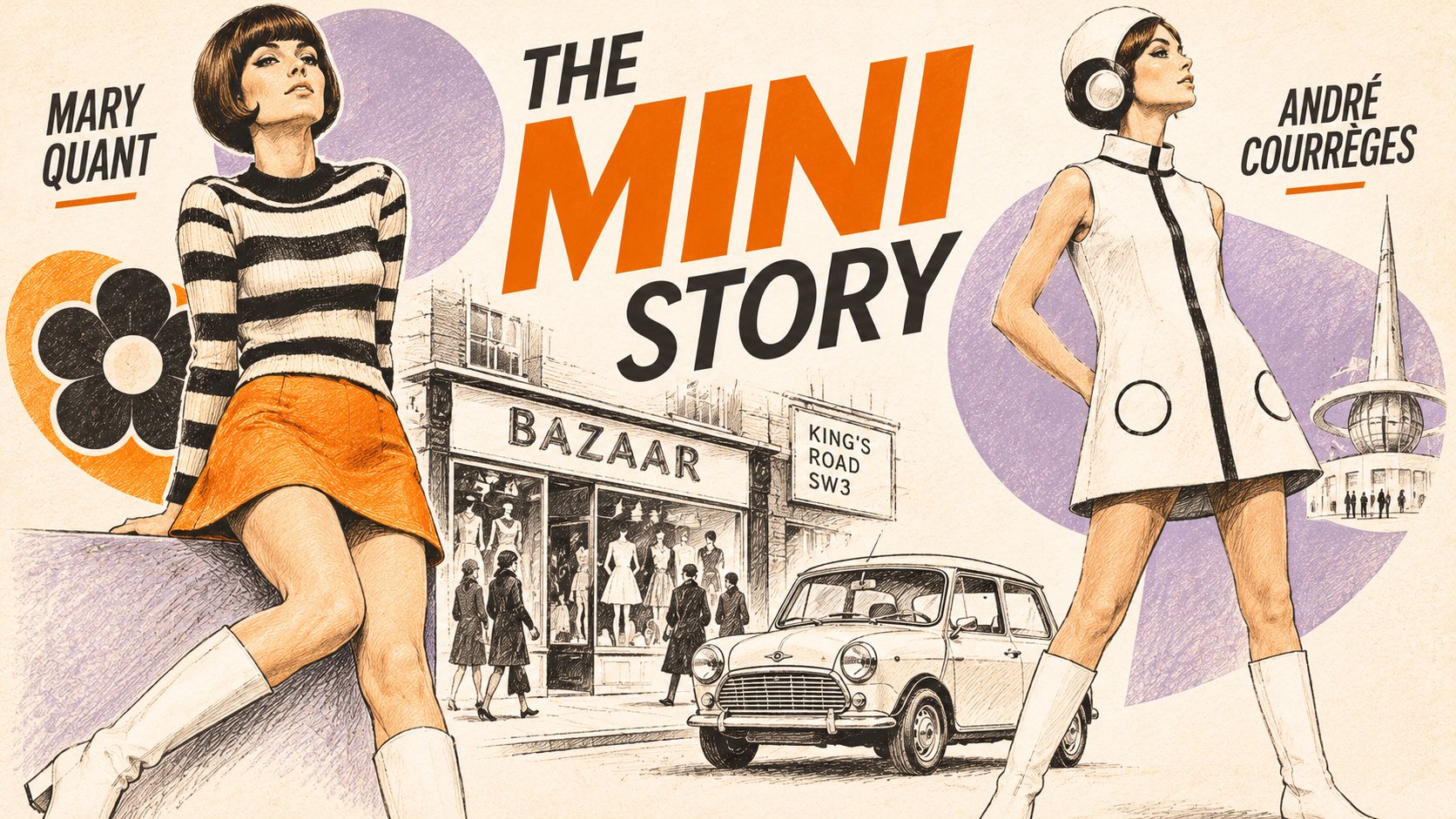
In 1955, Mary Quant, along with Alexander Plunket Greene, whom she would later marry, and businessman Archie McNair, opened a boutique called Bazaar on King’s Road in Chelsea, London. Quant was dissatisfied with the clothes available from wholesalers and eventually began designing garments for her own shop.
Bazaar operated in a rather unconventional fashion. The money earned from the day’s sales was often used to purchase fabric, which was made into fresh garments overnight. The shop remained open until late in the evening, played loud music and attracted young customers who were looking for an alternative to the clothes worn by their parents.
Across the English Channel, another designer was experimenting with women’s clothing. André Courrèges, a Frenchman trained in civil engineering, had worked under the Spanish fashion designer Cristóbal Balenciaga before establishing his own fashion house in 1961.
In 1964, Courrèges presented a collection in Paris featuring short, geometrically shaped dresses, worn with flat white boots. His subsequent Space Age collection drew inspiration from the growing public fascination with space exploration.
Quant, meanwhile, was developing her own version of the short skirt. She is believed to have named the miniskirt after her favourite automobile, the British Mini, which had been introduced in 1959.
Who actually invented the miniskirt remains a subject of debate. Quant herself credited the young women who frequented King’s Road, many of whom wanted their dresses shortened further. The term ‘miniskirt’ began appearing in newspaper reports in 1965, although hemlines reached their distinctly short proportions around 1966.
The growing popularity of the miniskirt also created a market for another item of women’s clothing: tights. Traditional stockings, held in place by suspenders, were rather unsuitable for garments that ended well above the knee. Quant subsequently marketed coloured and patterned tights under her own name.
In 1966, Quant received the Order of the British Empire (OBE) for her contribution to the British fashion industry. She arrived at Buckingham Palace wearing one of her own short jersey dresses.
The rise of models such as Twiggy further popularised the miniskirt internationally. Quant’s business expanded into cosmetics, footwear and other accessories, many carrying her distinctive daisy-shaped trademark.
In 2000, Quant resigned as a director of Mary Quant Ltd following a change in the company’s ownership. Her Japanese business associates took control of the enterprise, and the British designer’s familiar daisy trademark found a particularly enduring commercial home in Japan.