1 min to read
From Tagore to the Cinthol man
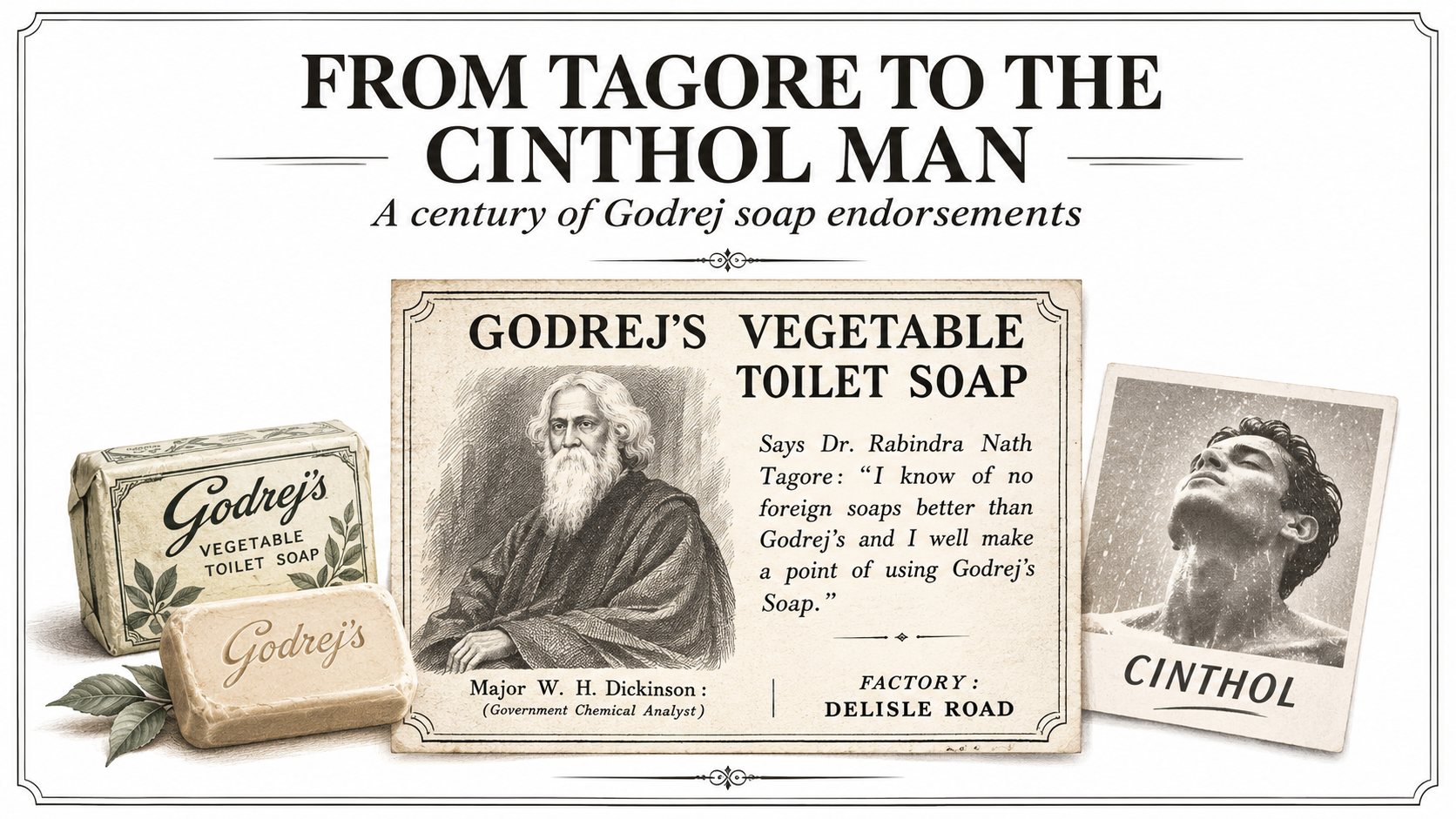
The Godrej group’s association with celebrity endorsements goes back to the years of the Swadeshi movement. In the early twentieth century, when Godrej introduced soaps made from vegetable oils instead of animal fat, among those who endorsed its products were Rabindranath Tagore, Annie Besant and C. Rajagopalachari. An old advertisement for Godrej’s vegetable toilet soap carried a testimonial from Tagore, comparing its quality favourably with that of imported soaps.
On 15 August 1952, the fifth anniversary of India’s independence, Godrej launched Cinthol. The product had its origins in Burjor Godrej’s doctoral research in Germany on manufacturing soaps using fatty acids. The outbreak of the Second World War in 1939 had forced him to leave Germany before completing his doctorate.
The name Cinthol was derived from two words, synthetic and phenol. Burjor replaced ‘synth’ with ‘cinth’ to give the brand a more appealing name.
It was only in the 1980s that Cinthol acquired its distinctly masculine image. An advertising campaign featuring Vinod Khanna riding a horse in 1985 was followed by one featuring Pakistani cricketer Imran Khan, who became popularly associated with the brand as the ‘Cinthol Man’.
Over the following decades, Cinthol’s brand ambassadors included Shah Rukh Khan, Arvind Swamy, John Abraham and Hrithik Roshan.
In August 2018, when Imran Khan became the Prime Minister of Pakistan, an Indian soap brand acquired a rather unusual piece of advertising trivia. One of its former brand ambassadors had become the head of government of a neighbouring country.