1 min to read
Before Nivea turned blue
In 1890, Oscar Troplowitz, a pharmacist, acquired the Hamburg-based business of Paul C. Beiersdorf. The company manufactured medicinal plasters and adhesive products, some of which would subsequently become the basis of two other well-known German brands, Hansaplast and tesa.
Troplowitz’s scientific adviser, dermatologist Paul Gerson Unna, introduced him to the work of chemist Isaac Lifschütz, who had developed an emulsifying agent called Eucerit. It allowed water and oil to be combined into a stable mixture, overcoming one of the limitations of skin creams manufactured in those days.
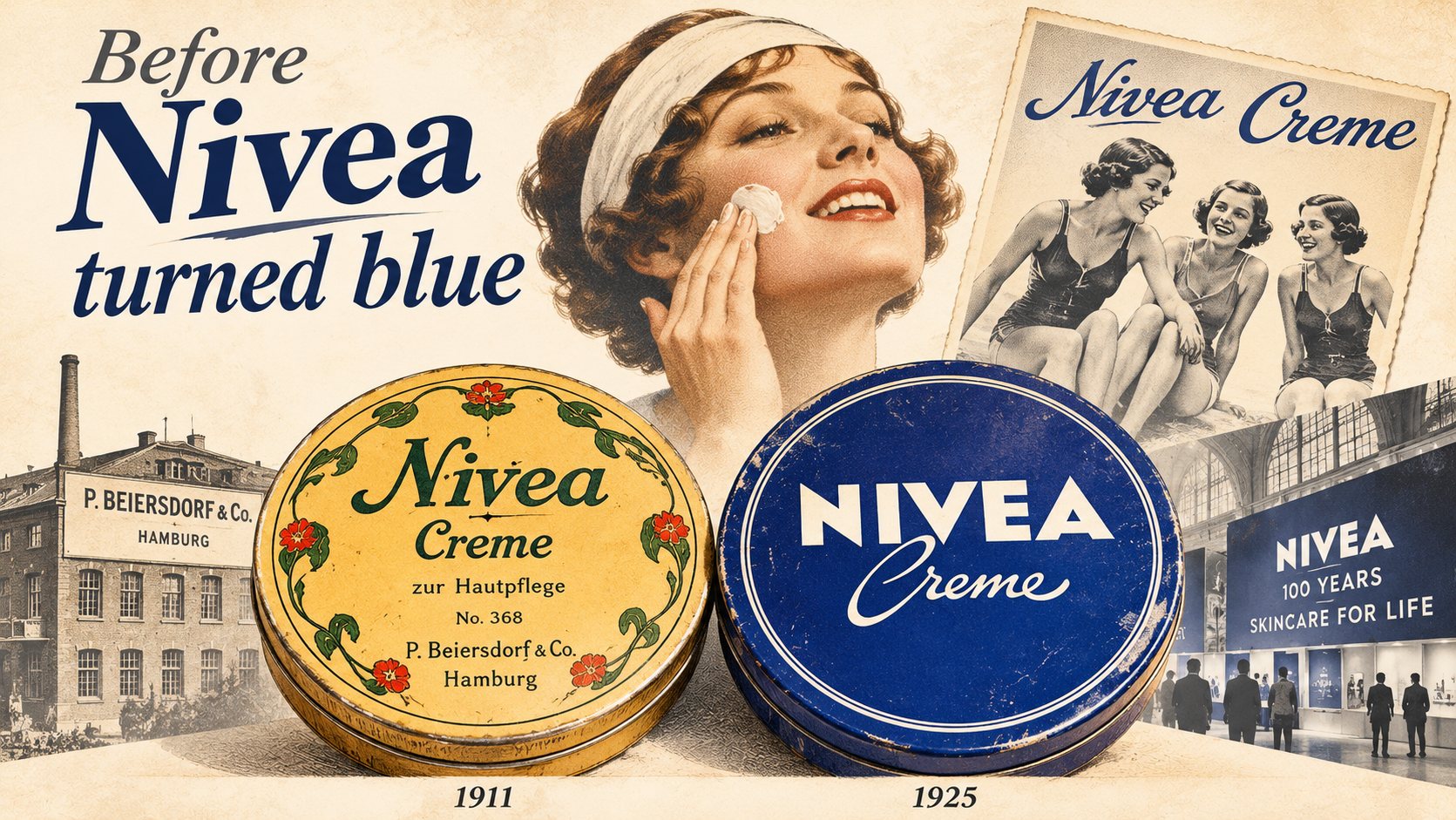
Troplowitz saw a commercial application for Eucerit beyond medicinal preparations. In December 1911, Beiersdorf launched a skin cream whose snow-white appearance inspired its name, Nivea, derived from the Latin words nix and nivis, meaning snow and of snow, respectively.
The original Nivea cream came in a yellow tin with decorative lettering and floral motifs, typical of the Art Nouveau designs popular in Europe at the time.
During the 1920s, changing European attitudes towards outdoor recreation, sports and personal grooming prompted Beiersdorf to reconsider its advertising. In 1924, it introduced the Nivea Boys campaign, followed by a nationwide search for three Nivea Girls. The Fröhlich sisters from Flensburg were selected from among more than a thousand applicants.
In 1925, the ornamental yellow packaging was replaced by the now familiar blue tin with white lettering. By the end of the decade, the Nivea range had expanded to include haircare and shaving products.
In India, Nivea products were marketed for many years by J.L. Morison.
On 25 July 2011, as part of its centenary celebrations, Nivea opened an exhibition at New York’s Grand Central Terminal. Among the exhibits tracing the German brand’s commercial history was the evolution of its most familiar product, the humble round tin of skin cream.