1 min to read
Burberry and the Trench Coat
Gabardine and shepherds, Amundsen's South Pole tents, D-rings built for war, and the Hollywood afterlife of Britain's most copied coat.
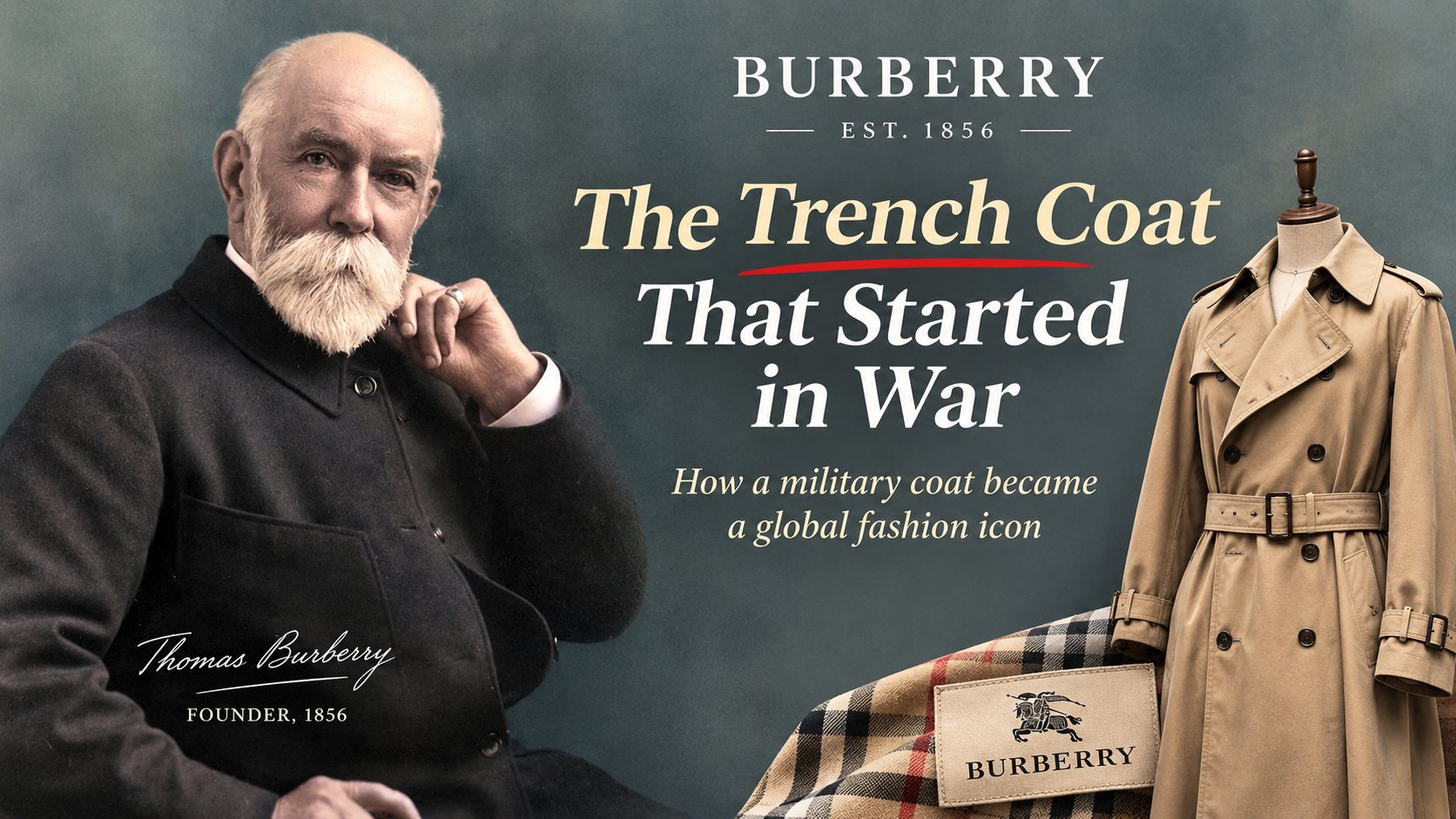
In 1856, a 21-year-old Thomas Burberry opened a clothing shop in Basingstoke, Hampshire, England. Inspired by the weather-resistant garments worn by local shepherds, he developed a fabric called gabardine in 1879 and patented it in 1888. Unlike the rubberised raincoats of those days, gabardine allowed ventilation while offering protection against rain.
The fabric became popular amongst polar explorers. Roald Amundsen used Burberry clothing and tents during his expedition to the South Pole in 1911. Sir Ernest Shackleton wore Burberry gabardine on three Antarctic expeditions.
In 1914, the British War Office commissioned Burberry to modify its existing military officer’s coat. Almost every feature of the redesigned garment had a functional purpose. The shoulder straps displayed military insignia or held gloves, the D-shaped rings on the belt held equipment, while the storm shield helped rainwater drain away.
Incidentally, another British clothing company, Aquascutum, established by John Emary in 1851, also lays claim to the invention of the trench coat.
During the First World War, British officers generally purchased their own uniforms. A good-quality trench coat cost around £3–4. Hollywood subsequently popularised the garment through films such as Casablanca (1942).
Burberry’s association with aviation is relatively less known. In 1937, Betty Kirby-Green participated in a record-breaking return flight between England and Cape Town in an aircraft named The Burberry.
For its 160th anniversary in 2016, Burberry commissioned Oscar-winning filmmaker Asif Kapadia to make a three-minute commercial, The Tale of Thomas Burberry. Featuring Domhnall Gleeson as Burberry and Dominic West as Shackleton, the commercial was shot on Kodak’s 35mm film and presented in the style of a Hollywood movie trailer.