1 min to read
The One-Rupee Book
How Dina Nath Malhotra met Allen Lane, built Hind Pocket Books on five-paise margins, and sold paperbacks at railway stalls, barbershops, and finally to Penguin itself.
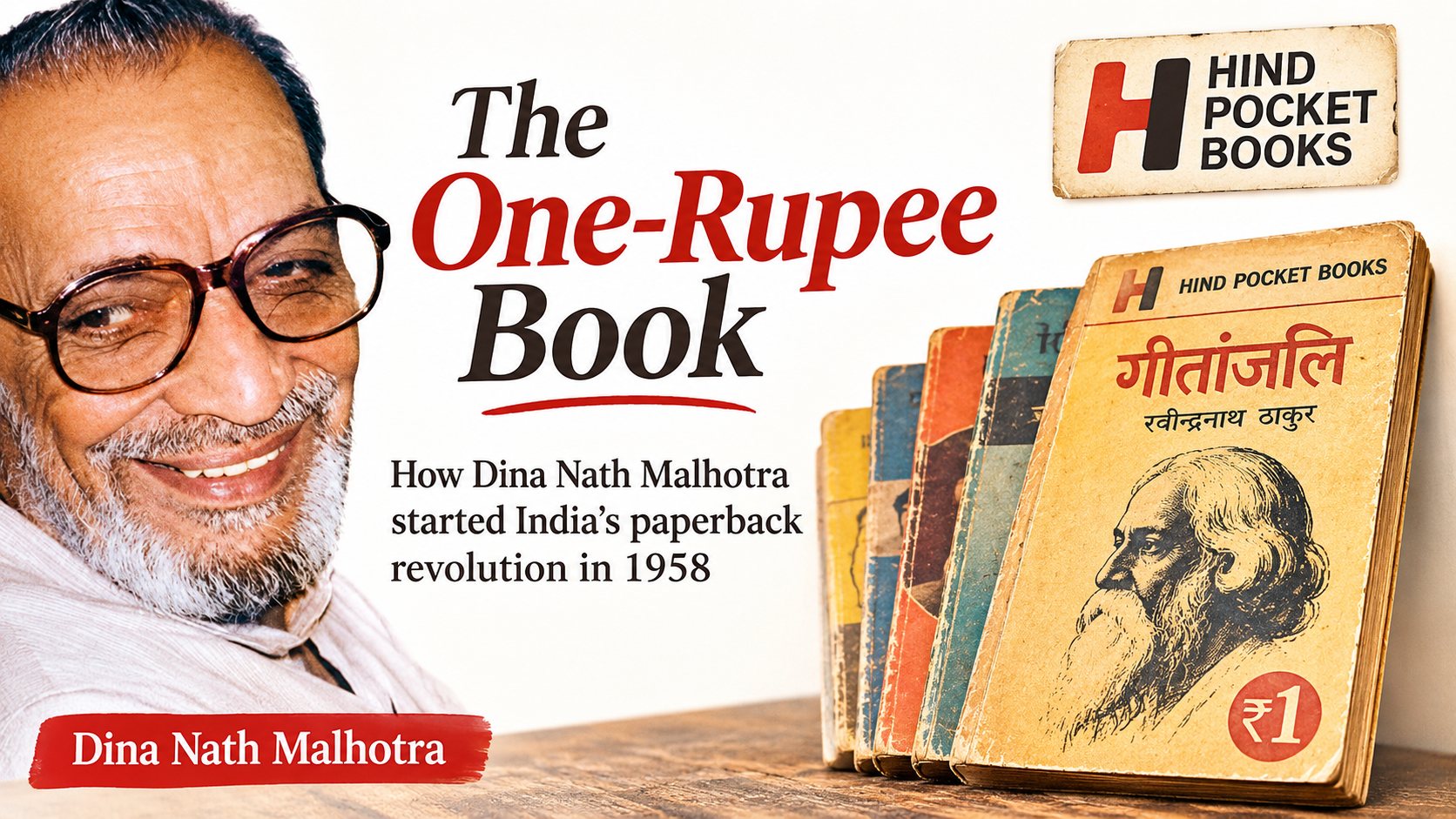
In 1956, Dina Nath Malhotra met Sir Allen Lane, the founder of Penguin Books, in England. Two years later, Malhotra established Hind Pocket Books in India, adopting Penguin’s business model of publishing inexpensive paperbacks for the mass market.
In 1959, he brought out a collection of ten Hindi paperbacks, including Rabindranath Tagore’s Gitanjali. Each book was priced at one rupee. According to Malhotra, even with a print run of 6,000 copies, his profit on a 160-page book was barely five paise, provided the entire stock was sold.
Malhotra approached railway bookstall owners, roadside vendors and even hairdressing salons to sell his books.
He subsequently introduced the Gharelu Library Yojana (Home Library Scheme), drawing inspiration from America’s Book of the Month Club. Readers could receive a collection of books every month at their doorstep. The volume of postal orders eventually necessitated the establishment of a post office within the publisher’s premises.
Amongst Malhotra’s most commercially successful authors was Gulshan Nanda, whose novel Jheel Ke Us Paar (1972) had an initial print run of five lakh copies.
Incidentally, in June 2018, Penguin Random House India acquired Hind Pocket Books, sixty years after Malhotra had set up his publishing house.