1 min to read
The wartime origins of Fanta
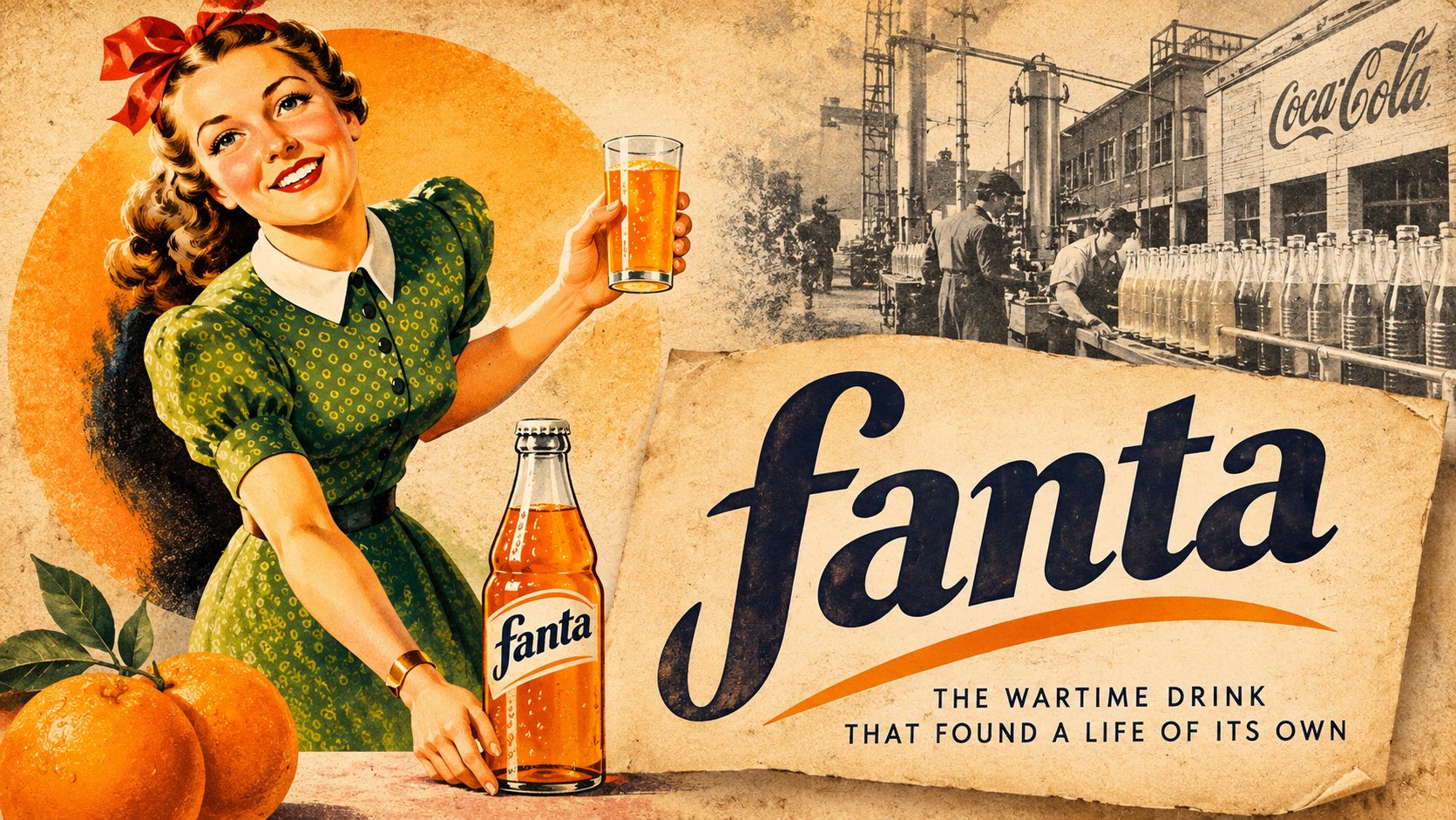
In 1940, Max Keith, who headed Coca-Cola’s operations in Germany, faced a peculiar problem. Wartime trade restrictions disrupted the supply of Coca-Cola concentrate from the United States, threatening the operations of its German bottling plants.
To keep the business running, Keith decided to develop a soft drink using ingredients available locally. The resulting beverage was made from apple pulp left over from cider production, whey (a by-product of cheese manufacturing) and beet sugar.
A competition was organised among employees to find a suitable name for the drink. Keith reportedly asked them to exercise their Fantasie, the German word for imagination. One of the company’s salesmen, Joe Knipp, suggested Fanta.
Despite its rather unconventional ingredients, the drink proved commercially successful, selling nearly three million cases in 1943. German households also used Fanta to sweeten food preparations at a time when sugar was rationed.
After the war, Coca-Cola resumed its regular operations and production of the original Fanta was eventually discontinued.
In 1955, Coca-Cola’s bottler in Naples, Italy, revived the brand with a new formulation using oranges. The orange-flavoured beverage was subsequently introduced in other European markets and reached the United States in 1960.
Over the years, Fanta’s advertising came to be associated with youth, friendship and fun, quite removed from the circumstances of wartime scarcity in which the brand originated.