2 min to read
The Spirit of Ecstasy
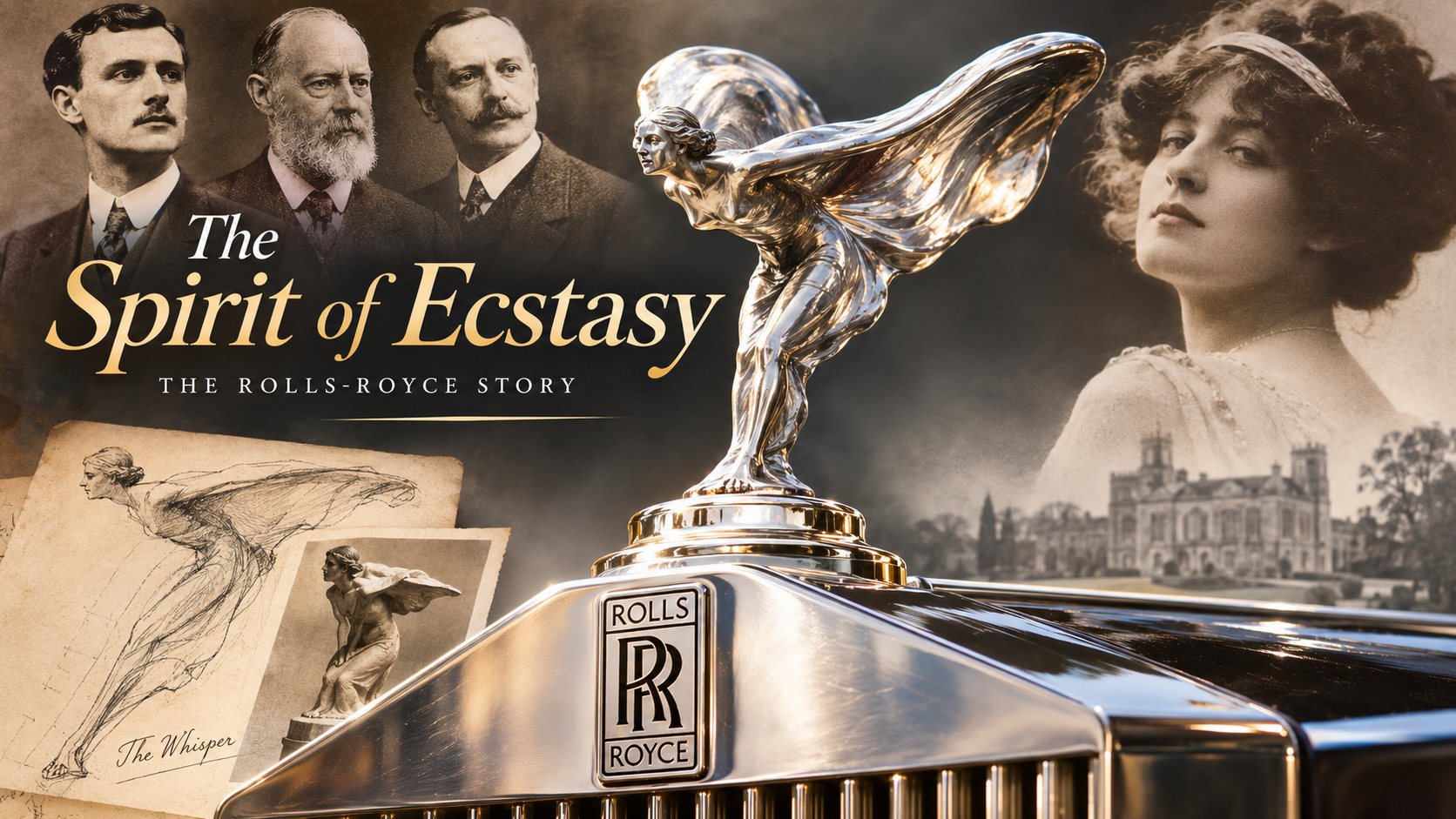
In the early years of motoring, when the radiator cap was prominently positioned on the bonnet of a car, wealthy motorists took to decorating it with personalised mascots. Some of these ornaments were rather eccentric, much to the displeasure of the management of Rolls-Royce. The company eventually decided to commission a mascot of its own.
The story behind the mascot involves several people associated with the early British motor industry.
Charles Rolls, an aristocrat and automobile enthusiast, ran a car import and dealership business in London. Dissatisfied with the quality of some of the cars he imported, Rolls was introduced in 1904 to Henry Royce, an electrical engineer who had begun manufacturing motor cars in Manchester. Their association led to the establishment of Rolls-Royce Limited in 1906.
Another important figure in the business was Claude Johnson, a former secretary of the Automobile Club of Great Britain. Johnson, who looked after much of the commercial and publicity work, came to be known as ‘the hyphen in Rolls-Royce’. He was also associated with popularising the company’s advertising claim, ‘The Best Car in the World’.
Among Johnson’s friends was John Scott Montagu, a motoring pioneer who established The Car Illustrated magazine in 1902. Montagu employed a young artist and sculptor, Charles Robinson Sykes, as an illustrator. His secretary, Eleanor Velasco Thornton, had previously worked with Johnson and also served as a model for several of Sykes’ artistic works.
Sykes created a small figurine for Montagu’s Rolls-Royce Silver Ghost. Known as The Whisper, it depicted a woman in flowing robes with a finger placed against her lips. Eleanor, who shared a private romantic relationship with the married Montagu, was the model for the figurine.
In 1910, Johnson commissioned Sykes to develop an official mascot for Rolls-Royce. The resulting sculpture depicted a woman leaning forward, her robes flowing behind her in the manner of wings. Known as the Spirit of Ecstasy, the design was officially registered on 6 February 1911. Eleanor is widely believed to have been its inspiration.
Until 1939, Sykes and his daughter Josephine were involved in hand-finishing the individual mascots.
To commemorate its centenary in 2011, Rolls-Royce announced a limited collection of 100 Phantom motor cars. The mascots for these cars would be cast in silver and mounted on gold-plated bases. The familiar Rolls-Royce badges would also feature a reversed silver-on-black colour scheme.
The Ghost and Phantom cars manufactured at Goodwood during the centenary year would carry a special inscription at the base of their mascots, ‘Spirit of Ecstasy Centenary – 2011’, rendered in a typeface called ITC Willow, whose lettering draws upon the Art Nouveau tradition.