1 min to read
The Railway Contractors of Kutch
How the Mistris of Kutch — many of whom had barely studied beyond third standard — became the contractors who built colonial India's railways, bridges and coal mines.
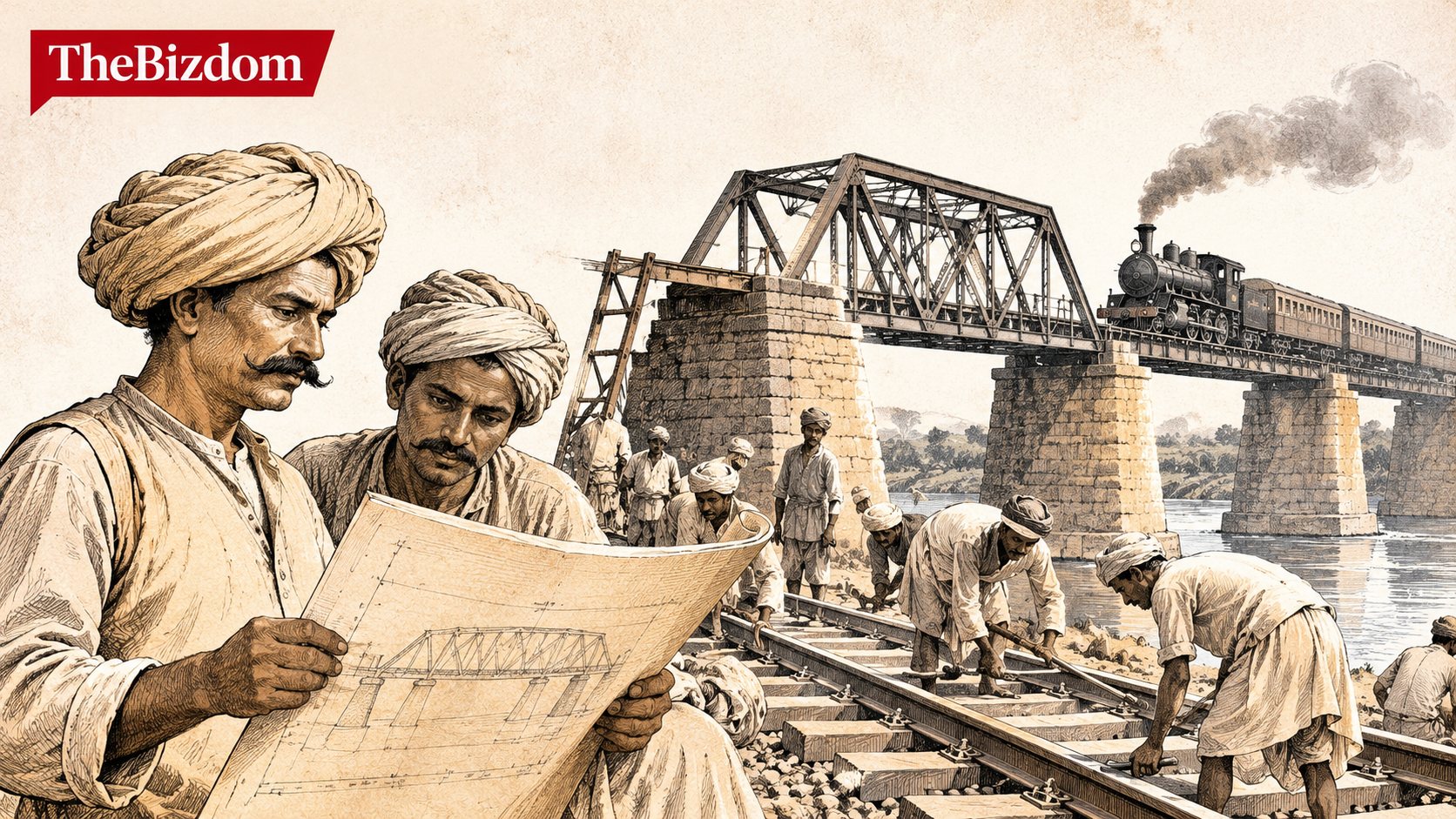
In my earlier post on the origins of Indian occupational surnames, I had mentioned that the word Mistri (or Mistry) comes from the Portuguese mestre, meaning master or expert. One community that came to be particularly associated with this occupational title was the Kutch Gurjar Kshatriyas, also known as the Mistris of Kutch.
Traditionally engaged in masonry, carpentry and construction, members of the community began migrating outside Kutch around the middle of the nineteenth century, when the British started building India’s railway network. Between 1850 and 1930, they established themselves as railway thekedars (contractors), undertaking work for various railway companies, irrigation departments and public works departments across undivided India.
According to community chronicles, several of these early contractors had barely studied beyond the third standard in Gujarati-medium village schools. Much of their knowledge of surveying, measurements and construction was acquired through years of working alongside experienced contractors and British railway engineers.
Railway construction also opened up other business opportunities. In 1894, Khora Ramji Chawda of Sinugra village was working on railway contracts in the Jharia region. He subsequently ventured into coal mining, becoming one of the earliest Indian entrepreneurs in the Jharia coalfields. Several other Kutchi Mistri families followed him into the colliery business.
Another prominent contractor was Rai Bahadur Jagmal Raja Chauhan, who undertook the construction of the foundations and erection of the steel girders of Bally Bridge across the Hooghly, inaugurated in 1931.
The bridge, originally named Willingdon Bridge after the British Viceroy, is now known as Vivekananda Setu. Rather unusually, the first train to cross it was named after its Indian contractor, the Jagmal Raja Express.