1 min to read
The origins of ICICI
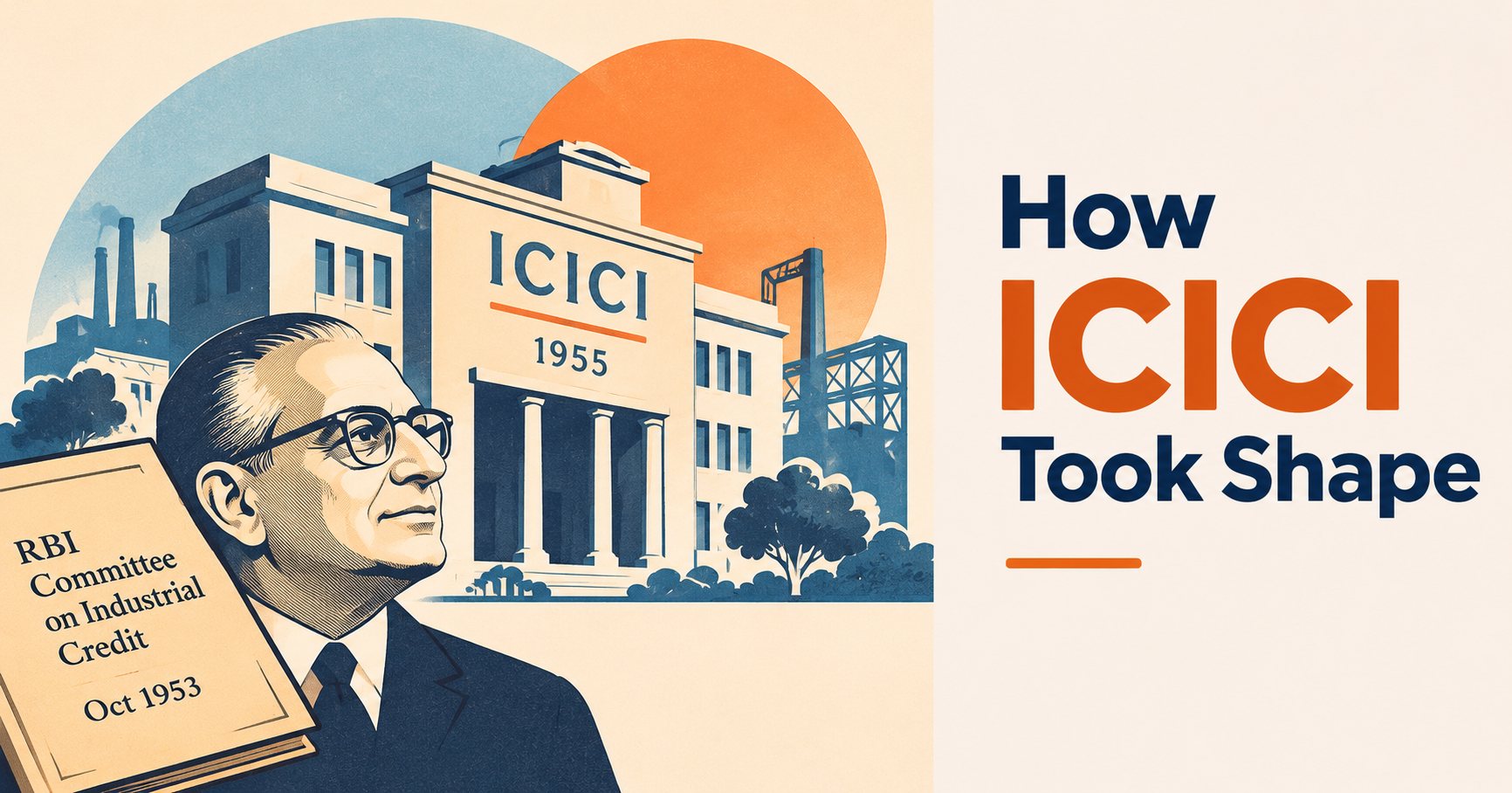
In October 1953, the Reserve Bank of India constituted a committee under Ardeshir Darabshaw Shroff, a prominent Bombay financier, to examine the availability of bank credit to private industry. Shroff had earlier been associated with the preparation of the Bombay Plan of 1944, which outlined a programme for India’s economic development.
One of the problems faced by Indian industrialists in those days was the availability of long-term capital, as commercial banks primarily provided short-term credit. In January 1955, the Industrial Credit and Investment Corporation of India (ICICI) was established with the support of the World Bank, the Government of India and representatives of Indian industry.
ICICI’s original business was financing industrial projects through loans and investments. Following the liberalisation of India’s financial sector in the 1990s, it ventured into commercial banking by establishing ICICI Bank in 1994.
In 2002, through a reverse merger, the parent financial institution was amalgamated with its banking subsidiary. The name of the industrial financing institution established in 1955 thus survived as that of a commercial bank.