1 min to read
The German connection of Cipla
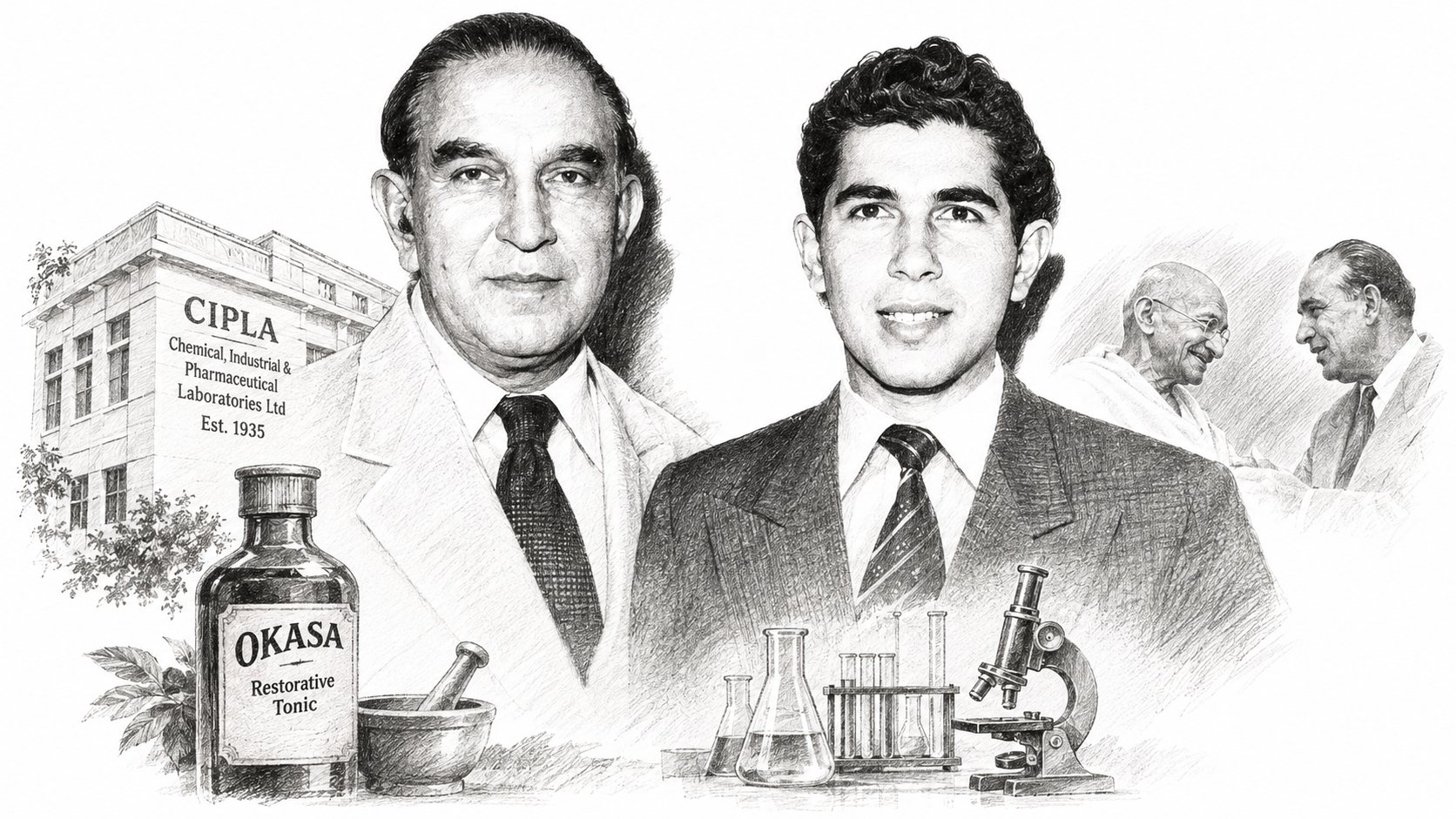
In 1924, when the family of Khwaja Abdul Hamied raised money to send him to England to pursue higher studies in chemistry, he had other plans. Hamied changed ships and headed for Germany, which had emerged as one of the world’s leading centres of chemical research and manufacturing.
He obtained his doctorate in chemistry from the University of Berlin, where he also met his future wife, Luba, a Lithuanian Jewish student. After returning to India, Hamied tried his hand at several commercial ventures before securing the Indian agency for Okasa, a German pharmaceutical preparation marketed as a restorative tonic.
The business provided Hamied with an entry into the pharmaceutical trade, although the early years were financially difficult. In 1929, his mother even sold some of her property to provide him with additional capital.
On 17 August 1935, Hamied established the Chemical, Industrial and Pharmaceutical Laboratories Limited, with an initial capital of ₹2 lakh. The company, whose initials would subsequently give us the name Cipla, operated from a rented bungalow at 289, Bellasis Road, Bombay Central.
Hamied had been associated with the nationalist movement and was deeply influenced by Mahatma Gandhi’s ideas of economic self-reliance. On 4 July 1939, Gandhi visited Cipla’s premises. Within two months, the Second World War broke out, disrupting India’s supply of medicines from Europe and creating an opportunity for indigenous pharmaceutical manufacturers.
Cipla expanded its manufacturing activities to meet the wartime demand for medicines.
Hamied’s eldest son, Yusuf, also pursued chemistry abroad, obtaining his doctorate from Cambridge University before joining Cipla in 1961. He would subsequently become one of the proponents of changing India’s pharmaceutical patent laws to facilitate domestic drug manufacturing.
In 2001, Cipla attracted international attention when it offered to supply a combination of three HIV/AIDS medicines to Médecins Sans Frontières for $350 per patient per year, at a time when treatment through patented medicines could cost several thousand dollars annually.