1 min to read
The long journey of ‘ginger’
How a word for an Indian root spice sailed from the Malabar coast to English kitchens
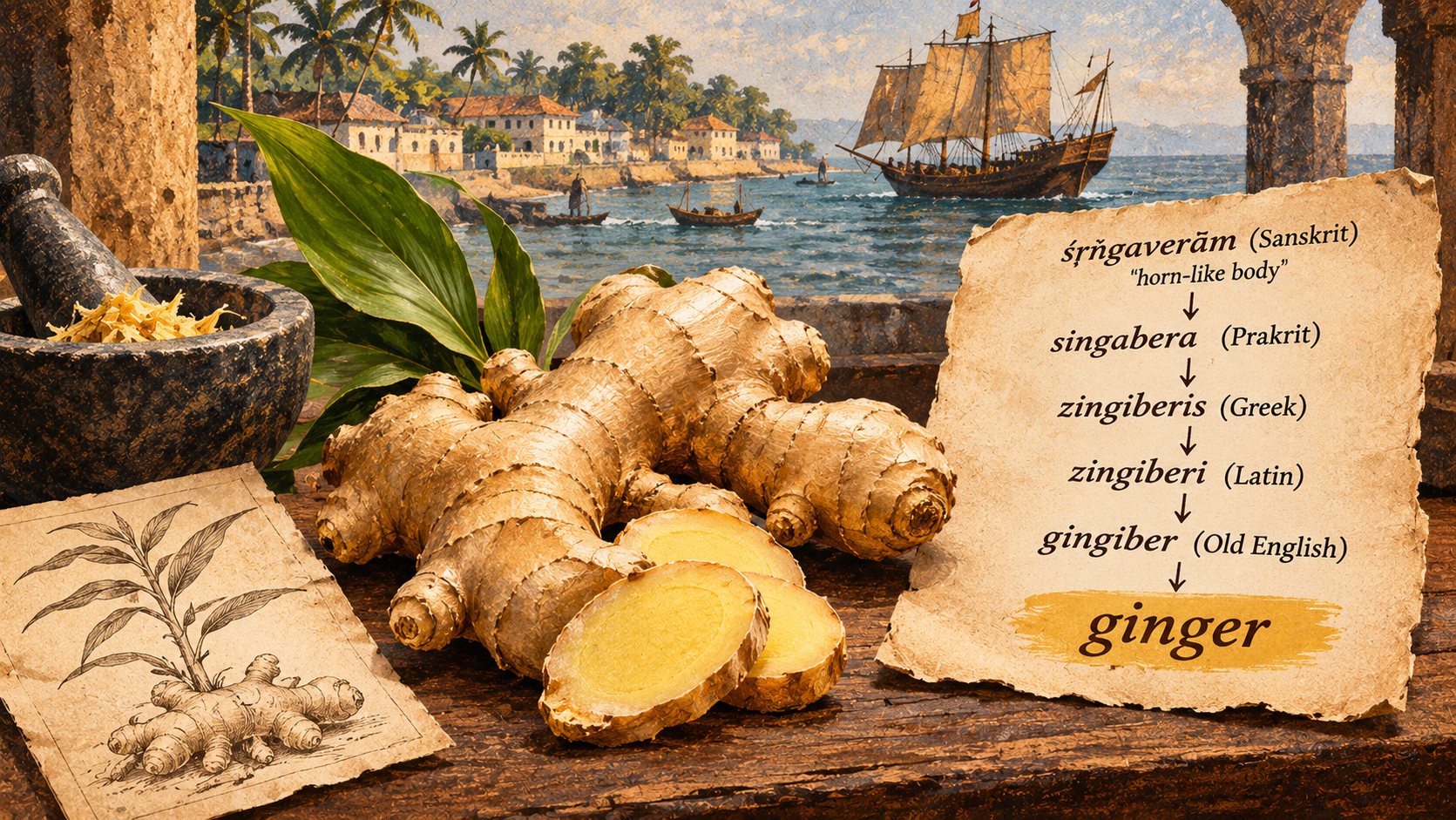
Ginger is one of those ingredients we can hardly do without in an Indian kitchen. The English word for the spice also has an Indian connection, going back to the days when spices from the Malabar coast found their way into the markets of the Roman Empire.
Ginger was known in England even before the Norman Conquest of 1066. The Old English gingiber came from the Latin zingiberi, borrowed from the Greek zingiberis. The Greeks, in turn, appear to have borrowed the word from the Prakrit singabera.
For a long time, scholars traced its origin to the Sanskrit shringavera, where shringam meant horn and vera meant body, presumably referring to the peculiar shape of ginger’s underground stem. However, another possible origin lies in the Dravidian languages, particularly the Tamil inji-ver, meaning ginger root.
The same Indian linguistic ancestry survives in several European languages, including the French gingembre, German Ingwer and Italian zenzero.