2 min to read
The Chettiars: Bankers Across the Bay of Bengal
How the Nattukottai Chettiars of Chettinad built a vast banking network across Burma and Southeast Asia — and why their mansions back home are built from the profits.
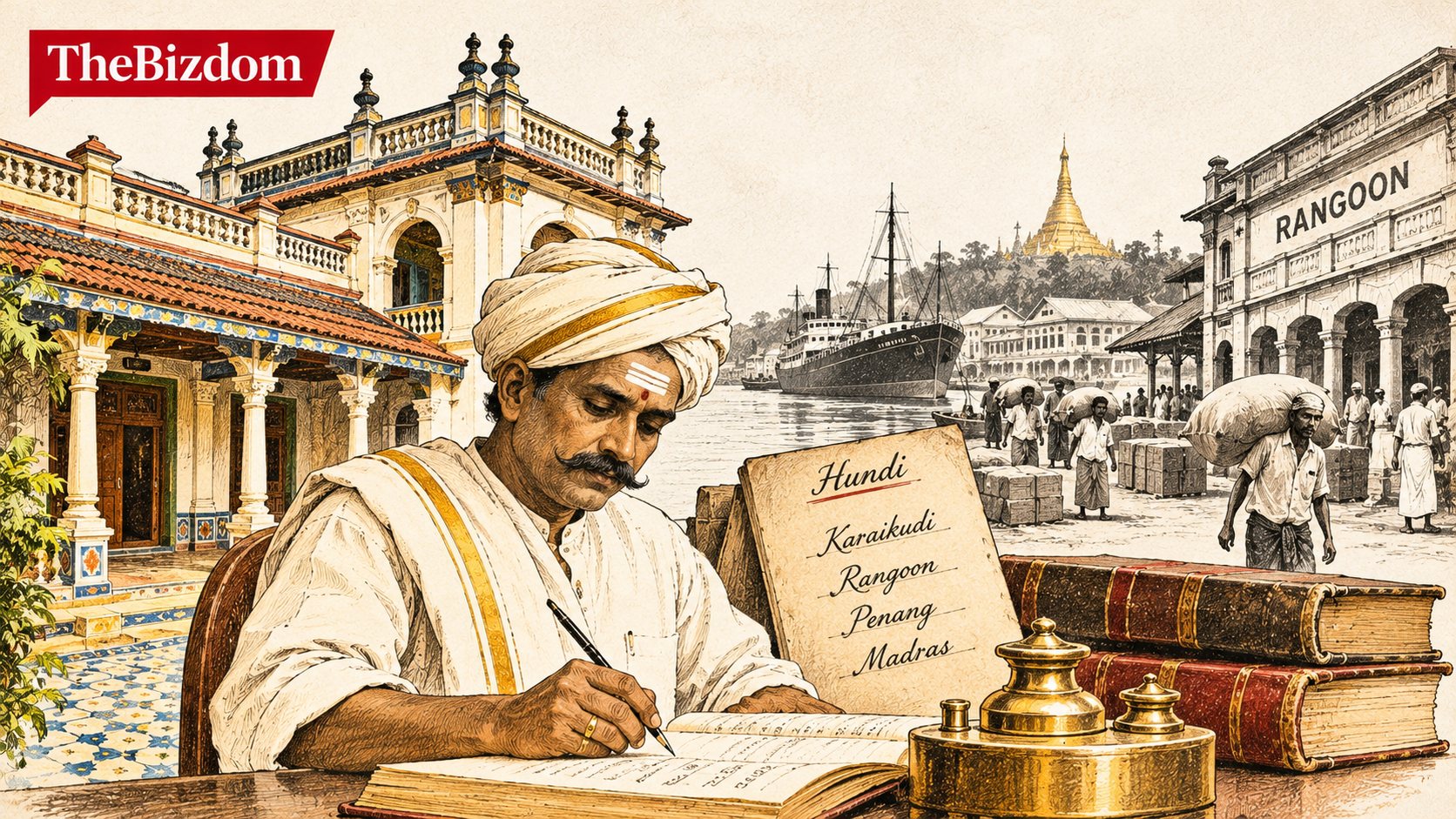
In February 1937, when M. Ct. M. Chidambaram Chettiar established the Indian Overseas Bank, it commenced operations simultaneously in Madras, Karaikudi and Rangoon, followed by a branch in Penang. The choice of these cities had much to do with the commercial history of the Nattukottai Chettiars, also known as Nagarathars.
As mentioned in my earlier post on Indian occupational surnames, Chettiar, Shetty and the north Indian Seth are generally traced to the Sanskrit word Shreshthi, denoting the head of a mercantile guild. The Nattukottai Chettiars originated from Chettinad, a cluster of villages around Karaikudi. Traditionally engaged in salt trading, they gradually diversified into other commodities and eventually finance.
Some Chettiars arrived in Burma in 1826, accompanying British military expeditions. Their first formal banking establishment reportedly came up in Moulmein in 1850. Two subsequent developments helped expand their business considerably. The opening of the Suez Canal in 1869 opened up European markets for Burmese rice, while the Lower Burma Land and Revenue Act of 1876 enabled cultivators to mortgage their land to raise money.
The Chettiars developed an elaborate banking network across Southeast Asia. Their individual firms accepted deposits, borrowed from one another and transferred money through hundis. In Rangoon, the Chettiar temple on Mogul Street also served as a financial exchange. Every Sunday at nine in the morning, bankers met at the temple to determine the prevailing interest rate on fixed-term deposits.
By 1930, there were around 1,650 Chettiar banking offices in Burma. However, the collapse of rice prices during the Great Depression resulted in widespread defaults. Between 1930 and 1937, the proportion of cultivated land held by Chettiars in Burma’s thirteen principal rice-growing districts increased from 6% to 25%. The resulting dispossession of Burmese cultivators contributed to growing resentment against Indian moneylenders.
Several Chettiar families subsequently redirected their capital towards Indian industry. One such family was the Murugappas, whose banking enterprise in Moulmein eventually gave way to businesses in engineering, bicycles, sugar and fertilisers.
The overseas commercial history of the Chettiars can still be read through the architecture of Chettinad. Their enormous mansions, built largely between the 1850s and 1940s, incorporated teak from Burma, satinwood from Ceylon, marble from Italy, chandeliers from Belgium and decorative tiles imported from Japan.