2 min to read
Double Seven: India's Sarkari Cola
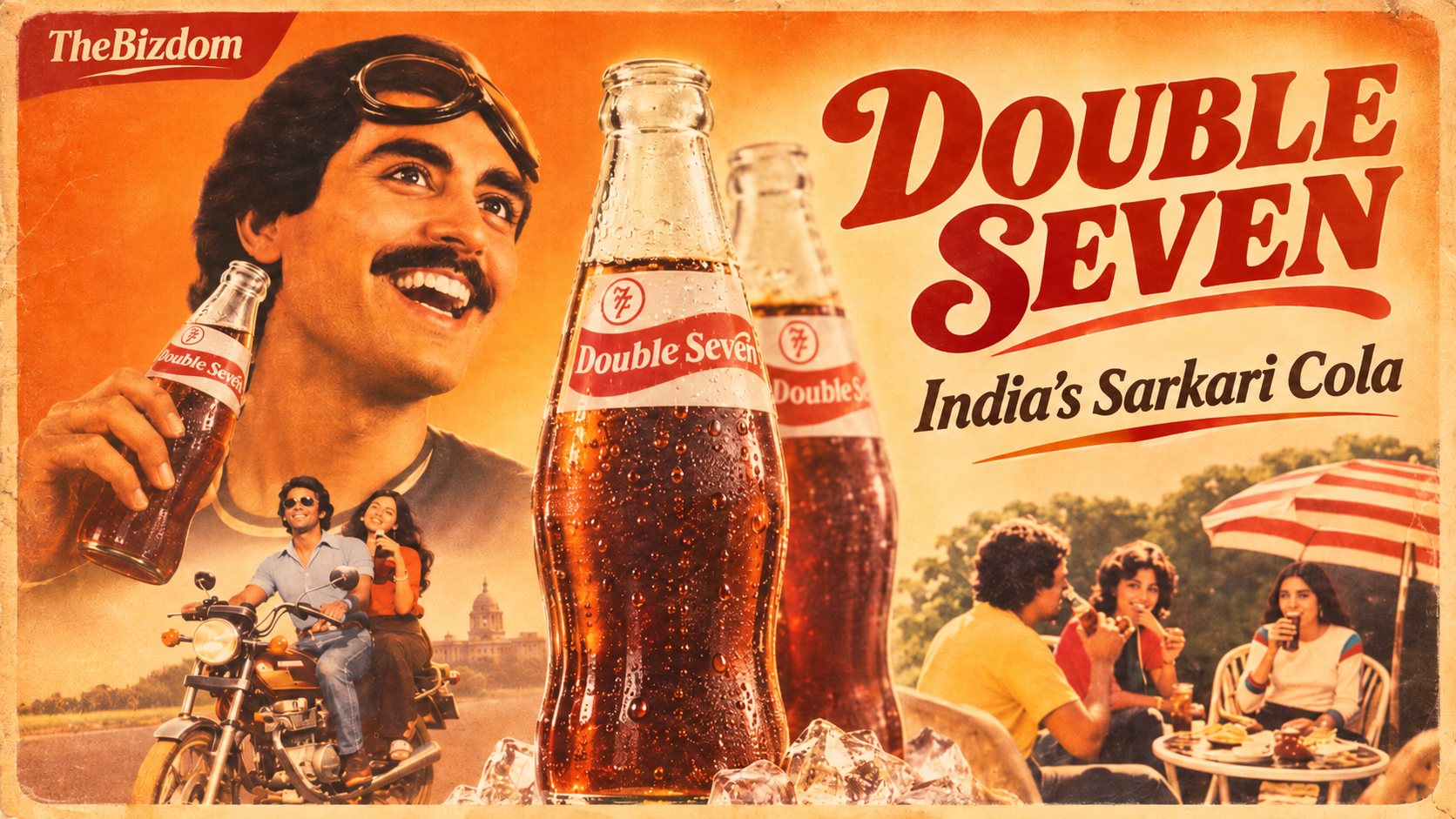
Hari Vishnu Kamath (1907–1982), a former civil servant, freedom fighter and member of Parliament from the Janata Party, once won a cash prize for suggesting the name of a soft drink. The year was 1977, and India was looking for an indigenous alternative to Coca-Cola.
The Foreign Exchange Regulation Act (FERA) of 1973 required several foreign companies operating in India to dilute their equity holdings. Under the Janata Party government, Industries Minister George Fernandes pressed Coca-Cola to reorganise its Indian operations. The American company was unwilling to part with control over its business and its closely guarded concentrate formula. In 1977, Coca-Cola decided to leave India.
The government entrusted the task of developing an indigenous cola formulation to the Central Food Technological Research Institute (CFTRI) in Mysore. The drink was to be manufactured and marketed by Modern Food Industries, a public sector enterprise better known for its Modern bread.
Kamath suggested the name ‘77’, commemorating the year in which Indira Gandhi’s Emergency ended and the Janata Party came to power. Marketed as Double Seven, or Satattar in Hindi, the drink became commercially available in 1978.
Private enterprises were also quick to exploit Coca-Cola’s departure. Pure Drinks, which had previously bottled Coca-Cola in India, introduced Campa Cola, while the Chauhan family’s Parle group developed Thums Up. With its relatively strong carbonation and distinctive flavour, Thums Up eventually became India’s leading cola. Double Seven, meanwhile, disappeared from the market within a few years.
The next chapter in India’s cola history began even before the economic reforms of 1991. PepsiCo secured government approval in 1988 through a joint venture with Voltas and Punjab Agro Industries Corporation. Its beverage was initially marketed under the name Lehar Pepsi.
Coca-Cola returned in 1993 and acquired several of Parle’s beverage brands, including Thums Up, Limca, Gold Spot and Maaza.
In June 2000, writing in The New Yorker about his return to India after a prolonged absence, Salman Rushdie described Campa Cola and Thums Up as ‘disgusting local imitations’ and remarked upon the proliferation of Coca-Cola advertisements across Delhi.
Indian consumers evidently had different preferences. Coca-Cola’s acquisition of Thums Up had given it a domestic brand that would continue to compete successfully with its own flagship cola.
As for Modern Food Industries, the government sold a controlling stake in the company to Hindustan Lever in 2000.