1 min to read
A brain tonic called Coca-Cola
In April 1865, John Stith Pemberton, an American pharmacist serving in the Confederate army, was wounded during the Battle of Columbus. He was administered morphine to relieve the pain and subsequently developed an addiction to the drug.
Pemberton began experimenting with medicinal preparations, including a coca-based alcoholic beverage called Pemberton’s French Wine Coca. Such preparations were quite popular in nineteenth-century America, where pharmacists sold a variety of tonics claiming to cure physical and mental ailments.
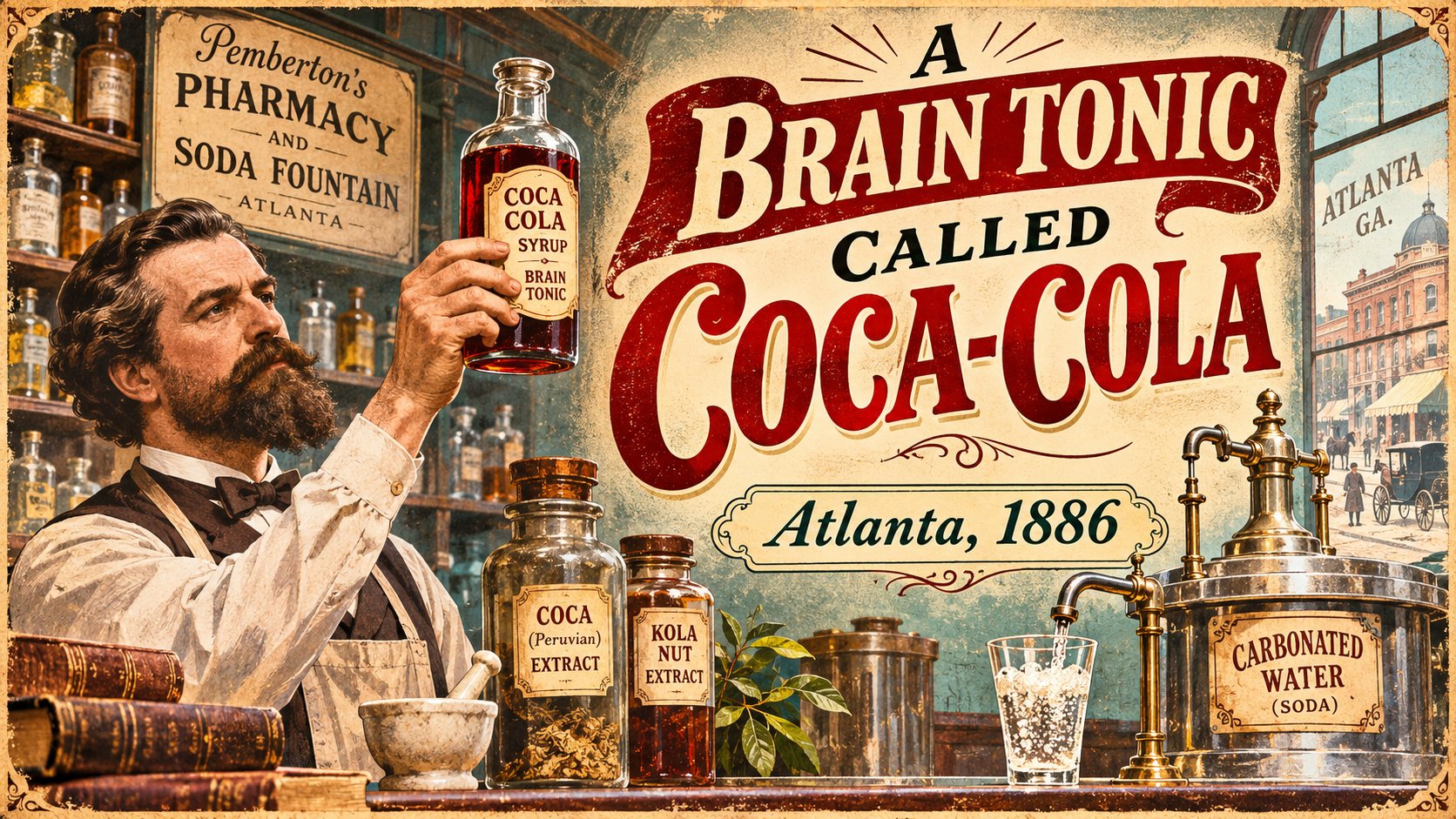
In 1885, when Atlanta introduced restrictions on the sale of alcohol, Pemberton began developing a non-alcoholic version of his beverage. The resulting syrup contained extracts of coca leaves and kola nuts.
On 8 May 1886, Jacobs’ Pharmacy in downtown Atlanta began selling Pemberton’s preparation mixed with carbonated water for five cents a glass. Initially marketed as a medicinal beverage, it was promoted as a remedy for headaches, nervous exhaustion and as a ‘brain tonic’.
The name Coca-Cola was suggested by Frank Mason Robinson, Pemberton’s bookkeeper, who believed that the two Cs would look attractive in advertisements. Robinson also designed the distinctive lettering using Spencerian script, a style of penmanship popular in nineteenth-century America.
The script continues to be used in Coca-Cola’s logo.