1 min to read
The Origins of PEP
How a Nigerian general's looted billions, a Swiss banking investigation, and Ferdinand Marcos's forgotten accounts gave compliance departments their most watched abbreviation.
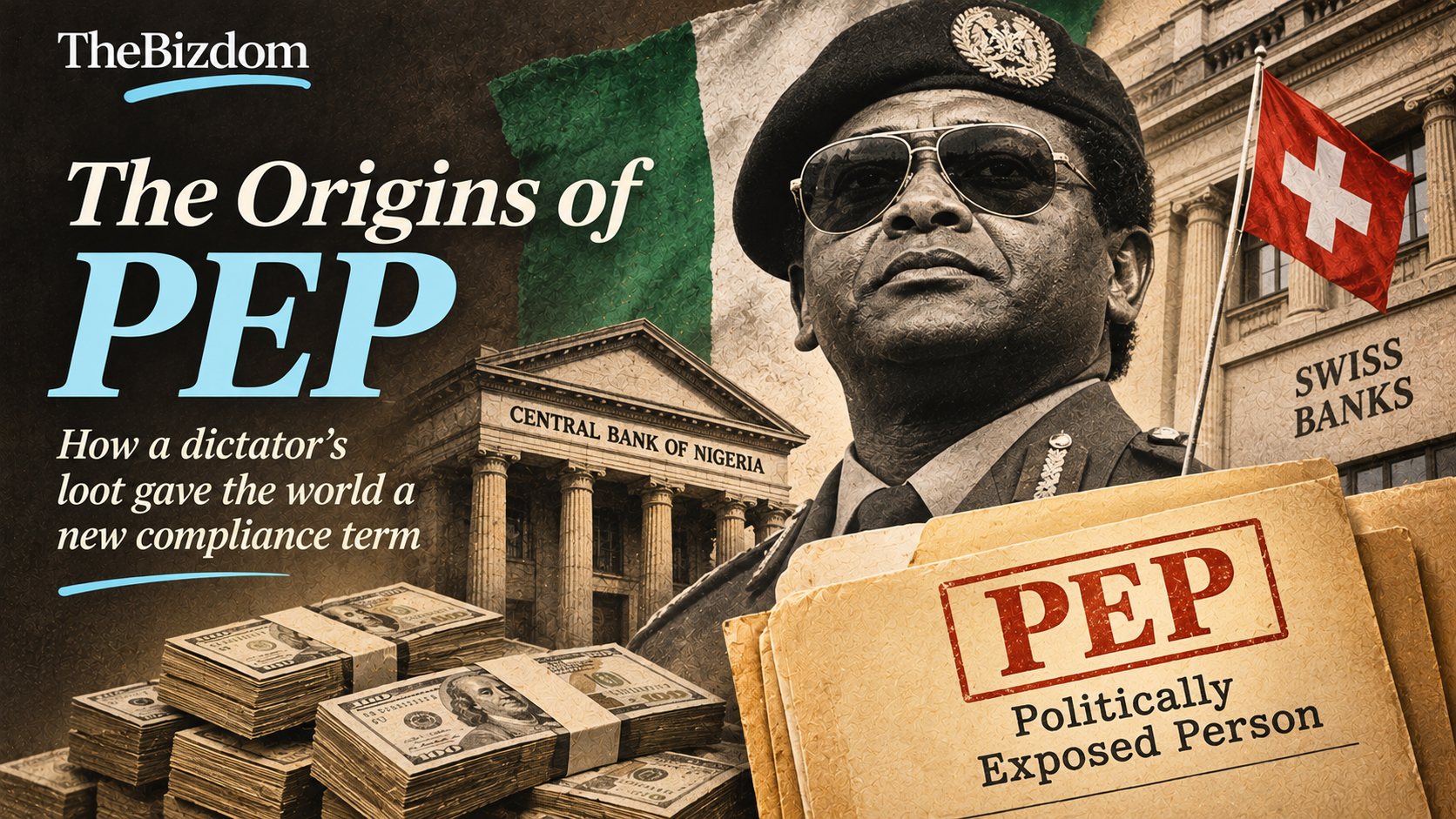
In financial regulation, the term ‘politically exposed person’ (PEP) refers to someone who holds, or has previously held, a prominent public office.
Much of the history of this expression can be traced to General Sani Abacha, who ruled Nigeria between 1993 and 1998. Abacha and his associates siphoned off billions of dollars from the Nigerian treasury, partly through withdrawals from the central bank under the pretext of national security expenditure. The money found its way into banks across Switzerland, Britain and other financial centres.
In September 2000, the Swiss Federal Banking Commission released the findings of its investigation into 19 Swiss banks that had dealings with Abacha’s associates. Only five had fully complied with their due diligence obligations.
Incidentally, Swiss regulators had introduced special scrutiny of politically connected customers as early as 1986, following the discovery of assets belonging to Ferdinand Marcos, the former President of the Philippines.
The Abacha affair gave the concept international prominence. In 2003, the Financial Action Task Force (FATF) formally incorporated requirements concerning foreign PEPs into its recommendations. In 2012, these were extended to domestic PEPs and officials of international organisations.