1 min to read
The Great Crash and Coffee
Black Tuesday, Brazil's mountains of unsold beans, a Swiss chemist who refused to give up — and how the Great Depression brewed Nescafé.
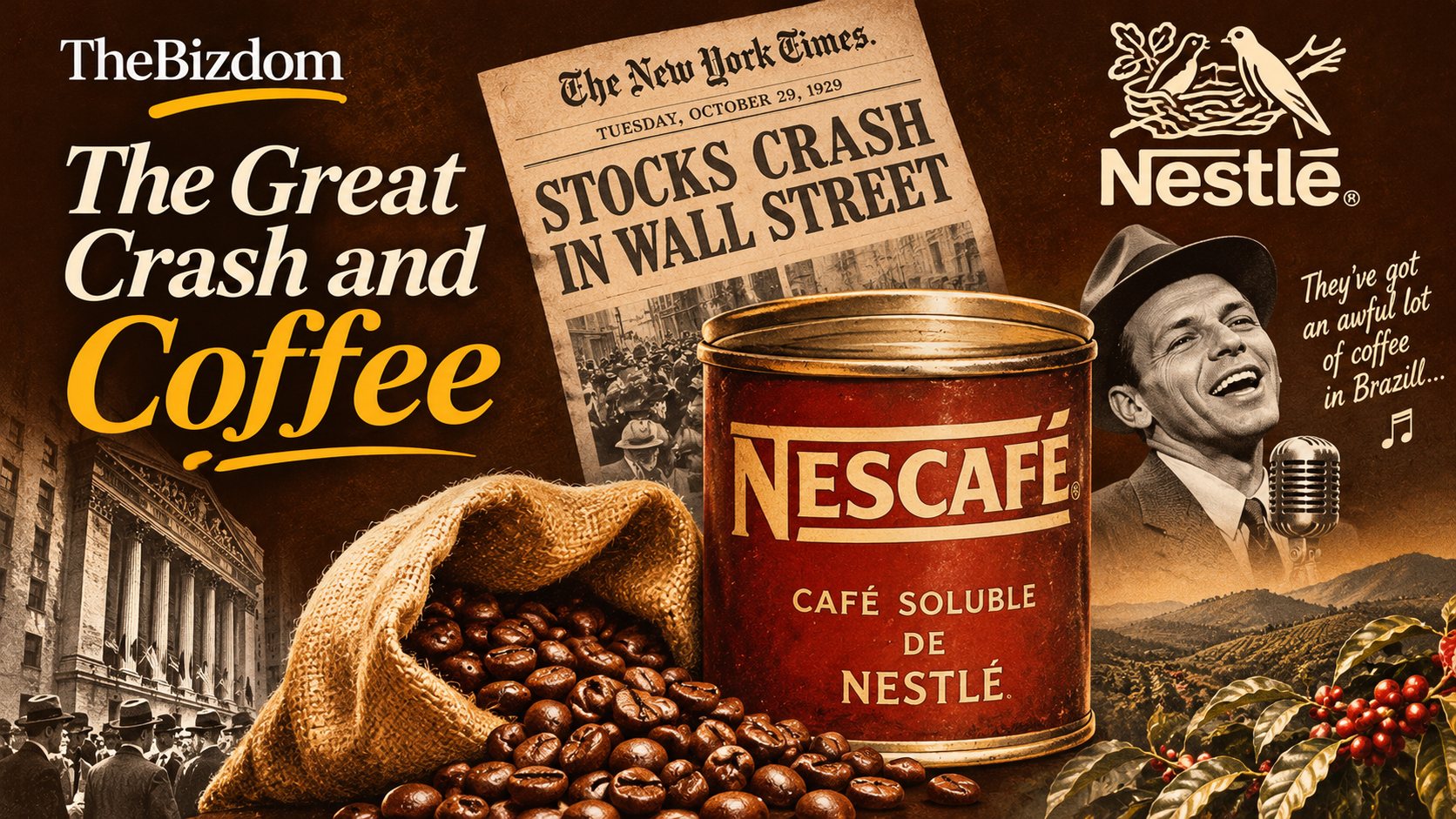
After the horrors of the First World War, a period of economic prosperity and growing consumer demand followed in America. The Roaring Twenties came to an abrupt end in October 1929. On 29 October, a day that came to be known as Black Tuesday, the Dow Jones Industrial Average fell by nearly 12%, deepening an economic downturn that would become the Great Depression.
How is coffee connected with all this?
Brazil, the world’s largest producer of coffee, was left with enormous stocks of unsold beans as international coffee prices collapsed.
Louis Dapples, the then chairman of Nestlé, received a rather unusual request from his former employer, the Banque Française et Italienne pour l’Amérique du Sud. The bank had warehouses full of Brazilian coffee and wanted Nestlé to develop a soluble coffee cube that consumers could simply dissolve in hot water.
A Swiss chemist, Max Morgenthaler, worked on the problem for several years. The difficulty was in preserving the natural flavour and aroma of coffee during the manufacturing process. Even after Nestlé discontinued the research project, Morgenthaler continued his experiments.
On 1 April 1938, Nestlé launched its soluble coffee powder in Switzerland under the brand name Nescafé, a combination of Nestlé and café. During the Second World War, it became a popular beverage amongst American soldiers.
Meanwhile, Brazil’s coffee surplus found its way into American popular music. In 1946, Frank Sinatra recorded The Coffee Song, written by Bob Hilliard and Dick Miles, with its now familiar line:
‘They’ve got an awful lot of coffee in Brazil.’