1 min to read
Behind the Phrase: Guns and Butter
From nitrate plants in Alabama and butter shortages in 1930s Germany to Paul Samuelson's textbook — how a wartime trade-off became economics vocabulary.
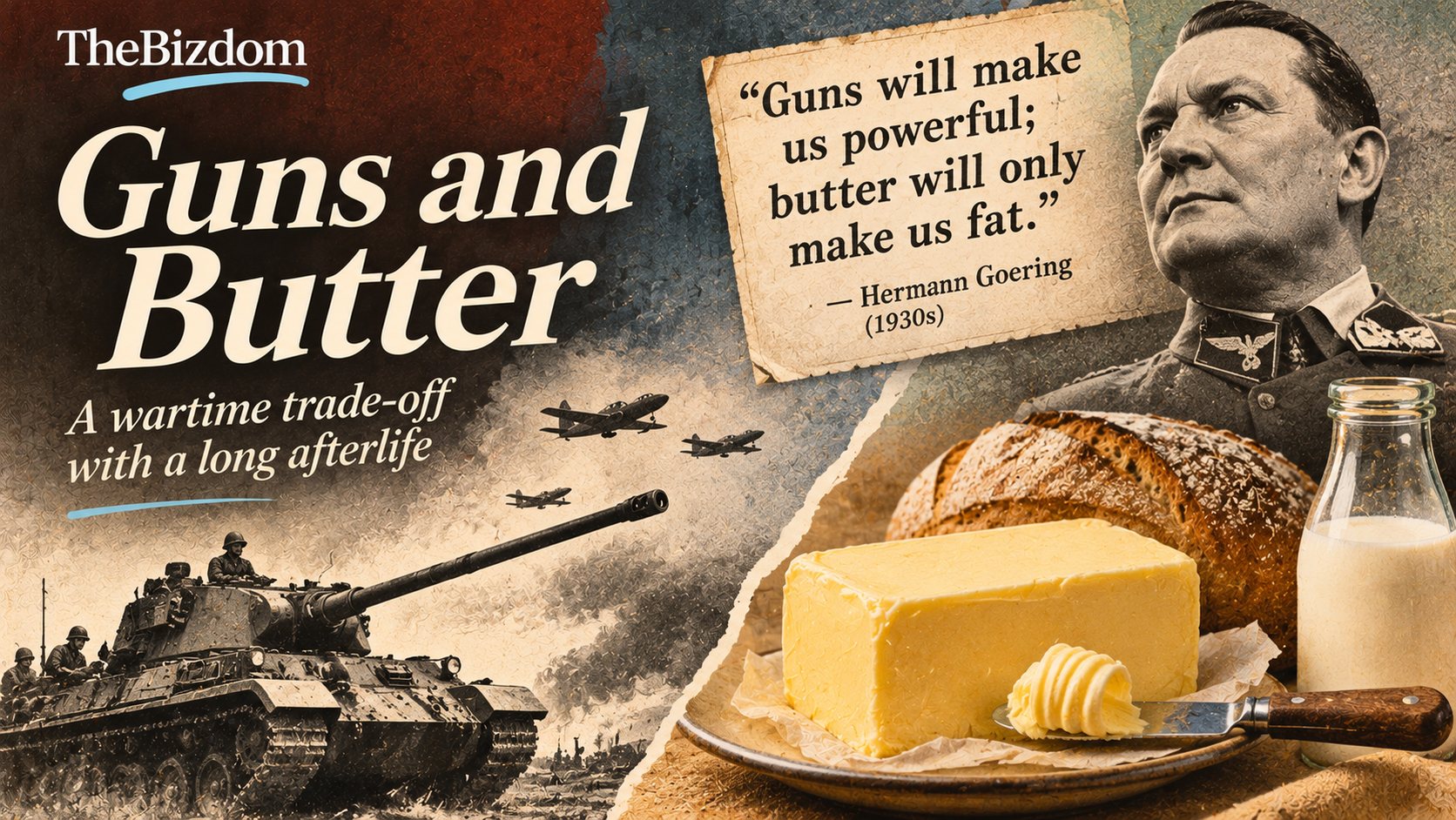
The origins of the expression ‘guns and butter’, commonly used by economists while discussing government expenditure on defence and social welfare, are somewhat uncertain.
One explanation takes us back to the First World War, when America depended heavily on Chile for its supplies of nitrates, a raw material required by both the fertiliser and explosives industries. In 1916, the US Congress authorised the construction of nitrate manufacturing facilities at Muscle Shoals in Alabama. The idea was to produce material for military use during wartime and fertilisers during peacetime.
The expression gained popularity in Germany during the 1930s, when Hitler’s rearmament programme coincided with shortages of butter and other food products. Hermann Goering, one of the senior figures of the Nazi regime, famously remarked:
“Guns will make us powerful; butter will only make us fat.”
In 1948, American economist Paul Samuelson used guns and butter in his widely read textbook Economics to explain the concept of opportunity cost.
Incidentally, in his April 1953 speech, The Chance for Peace, US President Dwight Eisenhower put the economics of military expenditure in more familiar terms. According to his calculations, the money spent on a single heavy bomber could build modern schools in more than 30 cities.