1 min to read
The Making of Navneet
From a Kutchi family's Bombay bookshop to 5,000 titles and 2.5 crore students — how exam guides, syllabus revisions and a Britannica acquisition built Navneet.
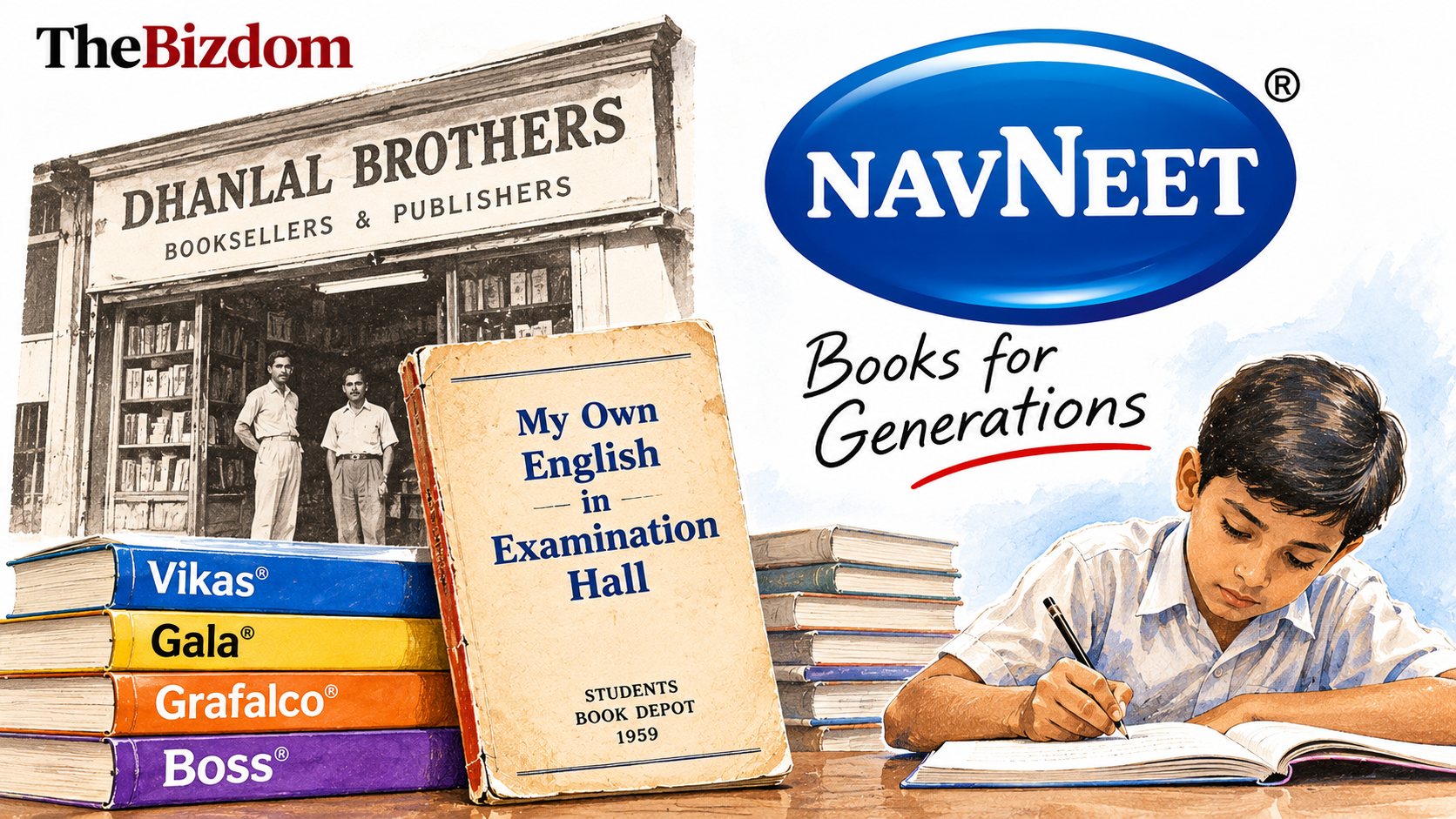
The origins of Navneet lie in the entrepreneurial journey of the Gala family, which migrated from Kutch to Bombay. Dhanjibhai Gala’s interest in literature led him and his brother Laljibhai to set up a bookshop called Dhanlal Brothers. While dealing in books, the family discovered that there was a ready market for educational books, particularly those that helped students prepare for examinations.
In 1959, the brothers brought out their first guide for students of English-medium schools. Titled My Own English in Examination Hall, the book was written in a question-and-answer format and published under the name Students Book Depot. With limited money at their disposal, the brothers reportedly printed only 3,000 copies.
In 1970, Navneet introduced its workbooks, followed in 1975 by its popular ‘21 Most Likely Question Sets’. Much of its publishing business was built around the school curricula of Maharashtra and Gujarat. Whenever the education boards revised their syllabuses, publishers like Navneet had a fresh market for their books, as students could no longer rely entirely on second-hand guides.
The family ventured into children’s books in 1990 and school stationery in 1993. A year later, Navneet became a publicly listed company. Its publications and stationery were marketed under several familiar names, including Navneet, Vikas, Gala and Boss.
By 2017, Navneet had over 5,000 titles and a network of more than 225 authors, with an estimated 2.5 crore students using its products.
In December 2016, the family business that had started with an examination guide acquired the Indian school curriculum business of Encyclopaedia Britannica, giving it a wider presence in the CBSE textbook market.