1 min to read
The colours of Technicolor
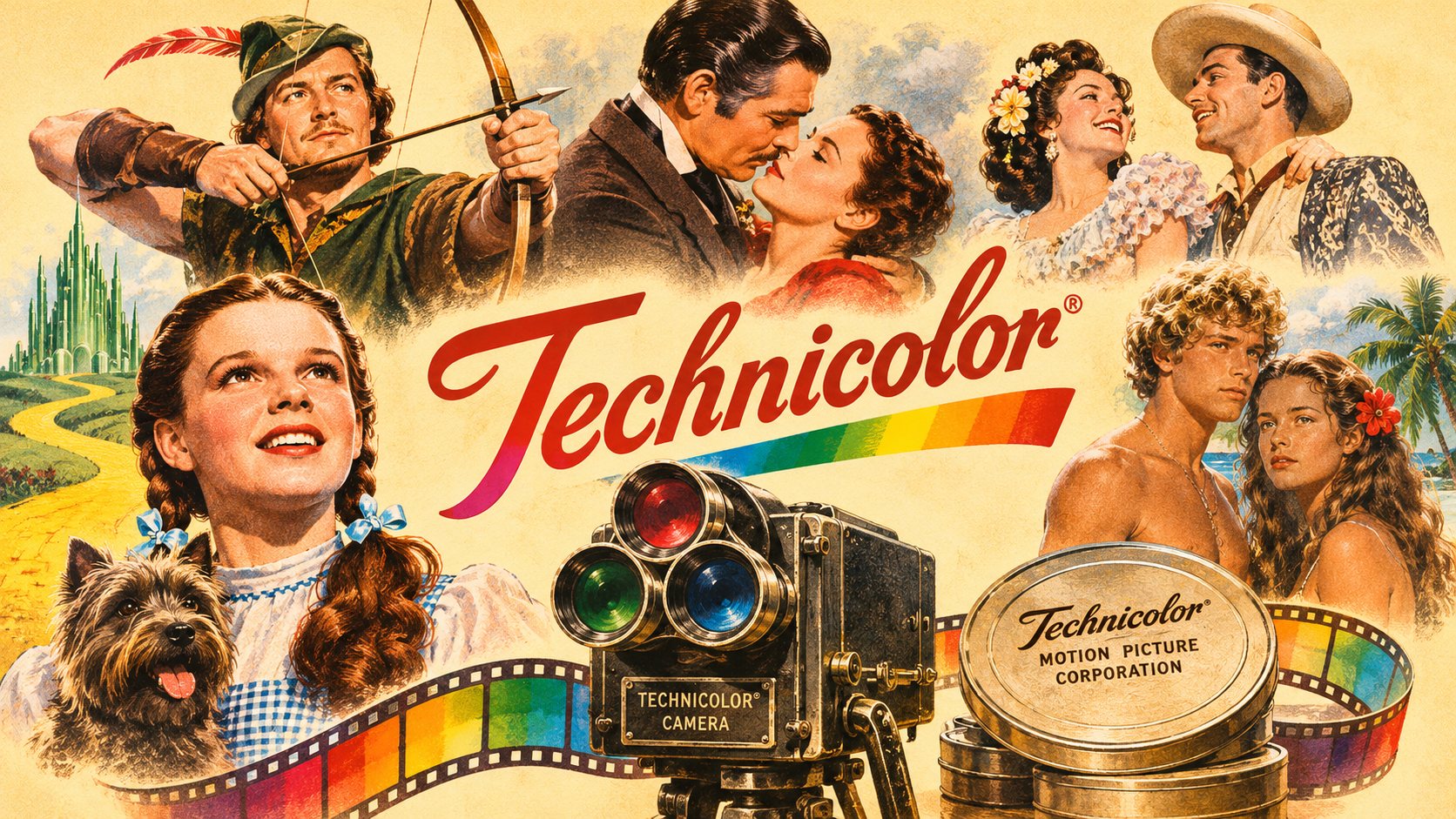
What is common to films such as The Wizard of Oz, Down Argentine Way, The Adventures of Robin Hood, Gone with the Wind and the 1949 British film The Blue Lagoon? All of them were filmed using Technicolor, a process that dominated Hollywood’s colour film production for much of the first half of the twentieth century.
One of its predecessors was Kinemacolor, developed in Britain by George Albert Smith and commercially introduced in 1908. The process reproduced colours using alternating red and green filters, although its ability to reproduce the full range of natural colours was limited.
In 1915, Herbert Kalmus, Daniel Comstock and W. Burton Wescott established the Technicolor Motion Picture Corporation in America. The ‘Tech’ in Technicolor was a tribute to the Massachusetts Institute of Technology (MIT), with which Kalmus and Comstock had been associated.
The company experimented with several colour reproduction techniques before introducing its three-strip process in 1932. A specially designed camera recorded three separate colour components, which were subsequently combined using a dye-transfer process.
Among the earliest commercial applications of the three-strip process was Walt Disney’s animated short film Flowers and Trees, released in 1932. Disney had secured exclusive rights to use the process in animated films for a limited period.
Technicolor’s association with Hollywood eventually extended beyond the name of a photographic process. The word entered the English vocabulary, where it came to describe anything exceptionally colourful or vivid.