1 min to read
Sonalika: Of Wheat and Tractors
How a Green Revolution wheat variety from Mexico's breeding material gave its name to what became India's third-largest tractor manufacturer.
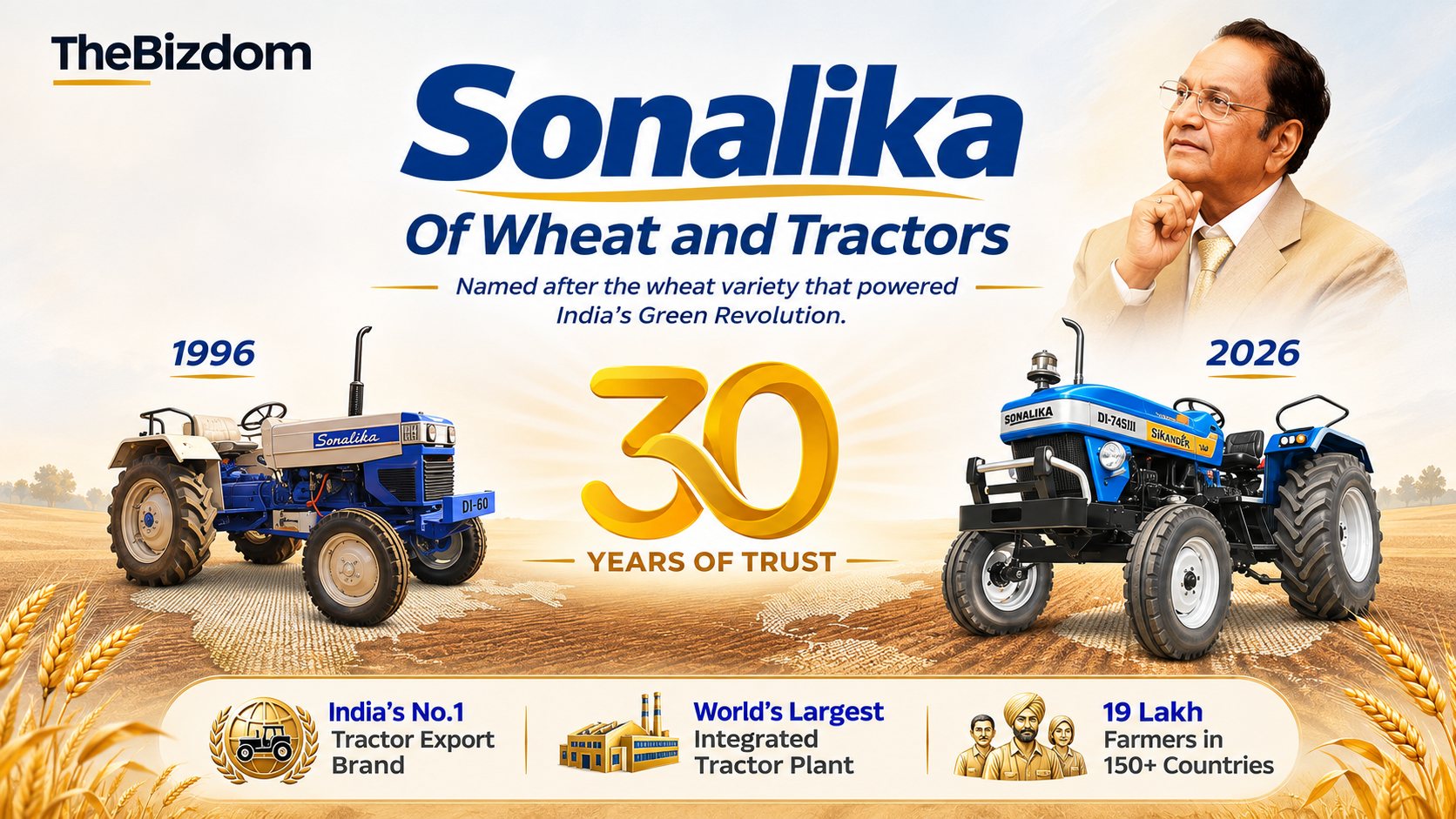
The Sonalika tractor derives its name from a variety of wheat that contributed to the success of India’s Green Revolution. Developed using Mexican wheat breeding material, Sonalika (RR-21) was released for cultivation in 1968. Along with Kalyan Sona, it became one of India’s most widely cultivated wheat varieties. Its amber-coloured grains were particularly suited for making chapatis.
It was around this time, in 1969, that the Mittal family ventured into the agricultural implements business in Punjab, manufacturing wheat threshers and seed drills under the Sonalika name.
Lachhman Dass Mittal, a postgraduate in English and Urdu literature, was employed with the Life Insurance Corporation of India (LIC). After retiring as a deputy zonal manager in 1990, he devoted himself to the family business. Farmers and dealers familiar with Sonalika’s agricultural implements encouraged the Mittals to manufacture tractors.
After several years of experimentation and with technical assistance from government institutions, the family entered tractor manufacturing in 1996 under International Tractors Limited (ITL), setting up its manufacturing facility in Hoshiarpur.
Thus, a variety of wheat developed in the 1960s lent its name to what eventually became India’s third-largest tractor manufacturer.