1 min to read
Operation Fish: When Britain's gold went to Canada
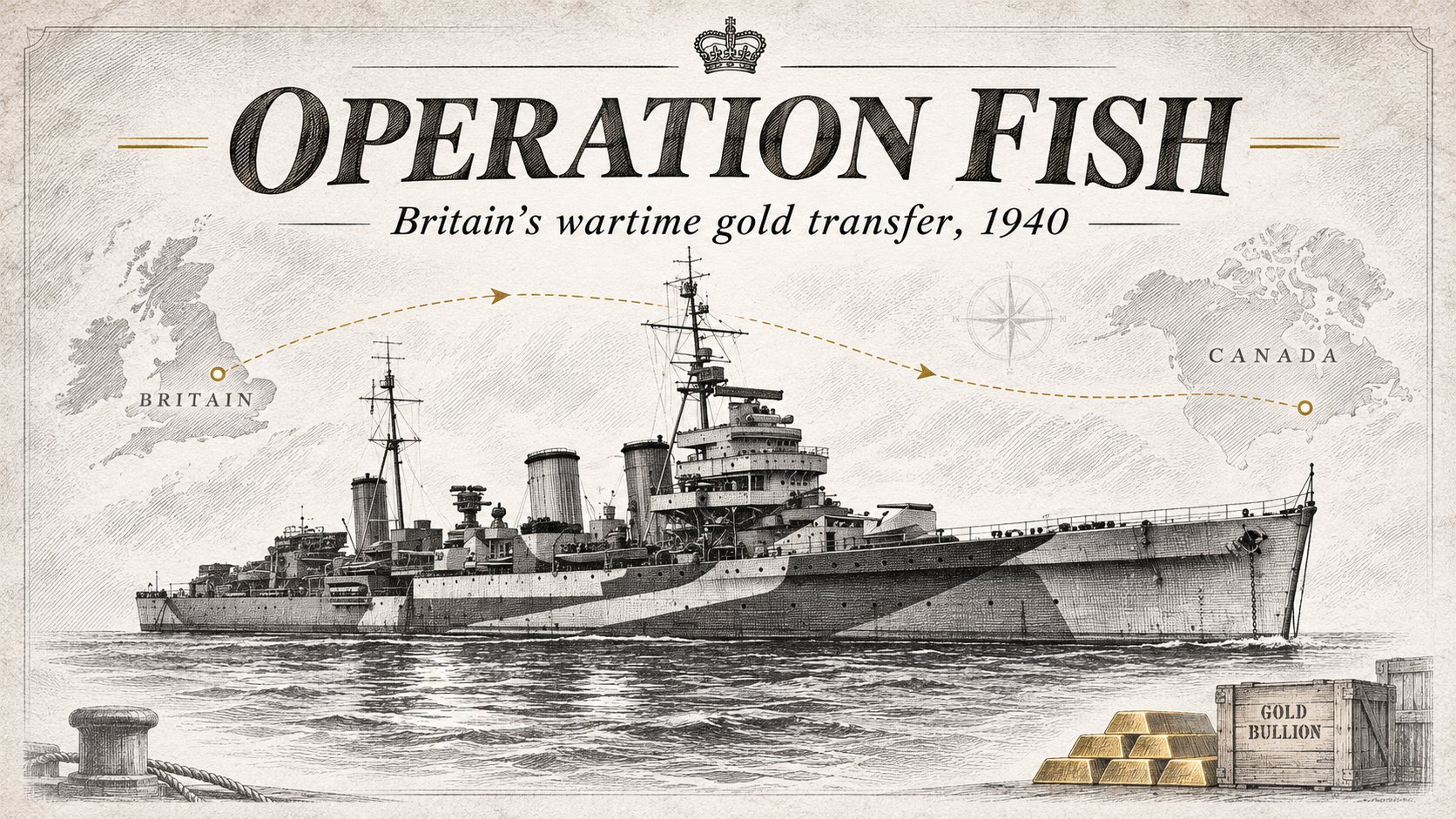
In the summer of 1940, following the advance of German forces across Western Europe, Winston Churchill began making contingency plans to continue the British war effort from Canada, should Britain fall to Germany. The Bank of England, meanwhile, was preparing to operate an alternative headquarters in Ottawa.
Britain needed its gold reserves to finance the purchase of military equipment, food and other essential supplies from North America. Keeping much of this wealth in London had become increasingly risky.
Under a secret mission codenamed Operation Fish, shipments of gold and financial securities began leaving Britain for Canada on 24 June 1940. The cargo included gold belonging to the Bank of France, as well as securities previously held by British citizens and taken over by the government under wartime emergency powers.
The first consignment arrived at Halifax aboard HMS Emerald on 1 July. The gold was subsequently transported to the Bank of Canada’s vaults in Ottawa, while the financial securities were housed in the basement of the Sun Life Building in Montreal.
Some 120 retired financial professionals were recruited to assist with the administration of the securities.
By the end of Operation Fish, more than 1,500 tonnes of gold bars and coins had been deposited in Ottawa. Despite the dangers posed by German submarines, none of the operation’s gold-carrying vessels was lost.
According to the Bank of Canada Museum, the combined shipments were worth approximately $160 billion in 2017 dollars.